

Product Field NotesCompanion Plants
Lemon Verbena: A Lemon-Scented Shrub for the Lavender Tea Garden
 Save
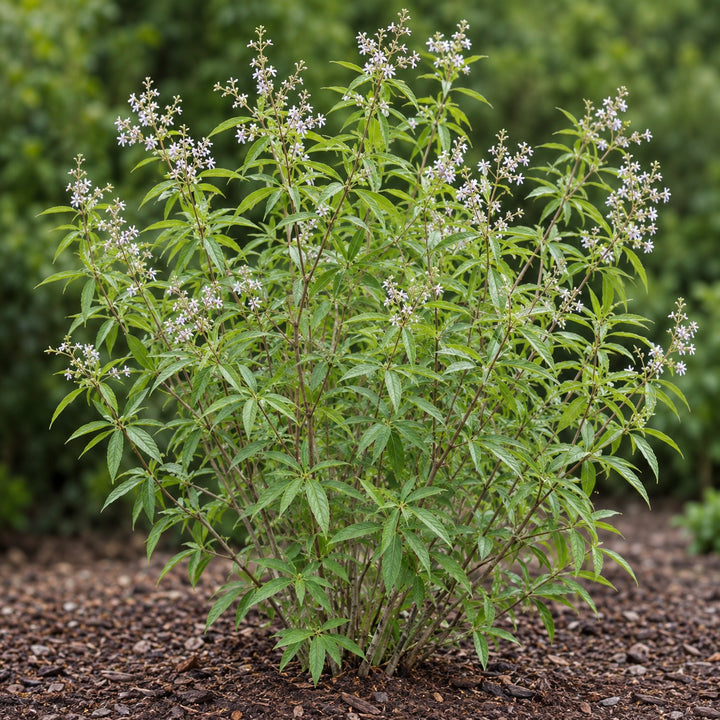
Lemon verbena may be the most lemony plant you can grow. Brush a leaf and you get a strong, clean lemon scent; steep a few and you have a bright herbal tea. It is a tender woody shrub with rough, glossy, lance-shaped leaves in whorls of three, and in late summer it adds open sprays of tiny white to pale lilac flowers.
In our zone, lemon verbena does not survive winter outdoors. Grow it in a pot you can bring inside, or grow it as a one-season annual.
Lemon verbena at a glance
| Trait | What to expect |
|---|---|
| Botanical name | Aloysia citrodora (also listed as Aloysia triphylla) |
| Leaves | Glossy, rough, lance-shaped, strongly lemon scented |
| Flowers | Open sprays of tiny white to pale lilac flowers |
| Size | 24 to 48 inches tall and wide in containers |
| Bloom | Late July into early fall |
| Hardiness | USDA zones 8a to 10b; not hardy in zones 5 and 6 |
| Water | Moderate |
| Best uses | Tea garden, culinary, containers, fragrance, potpourri |
Lemon and lavender in one garden
Lemon and lavender are a natural flavor pair, and growing them side by side makes a fragrant little tea and kitchen corner. Set a pot of lemon verbena at the end of a lavender bed or on a sunny patio with potted lavender. Keep them in separate containers: lemon verbena wants more regular water than lavender, and lavender would rather stay on the dry side.
Map a culinary herb corner in the Companion Plant Planner.
Growing it in a pot
- Sun: as much as you can give it. It grows fast in warm weather.
- Container: a pot with drainage holes and good potting mix. Move it up a size as it grows.
- Water: keep the soil steadily moist but never soggy.
- Pinching: pinch stem tips early in the season for a bushier plant with more leaves to pick.
- Pests: aphids, whiteflies, mealybugs and spider mites can show up, mostly indoors. Check leaf undersides.
Harvesting and using the leaves
Pick leaves any time once the plant is growing well; regular picking keeps it bushy. Use them fresh or dry them on a screen in a shady, airy spot and store them in a jar. Lemon verbena flavors teas, desserts, fruit salads, jams, sauces, fish and drinks. Steep a few leaves with a pinch of culinary lavender for a simple homemade herbal tea, or infuse them in sugar for baking. The leaves are tough, so strain or remove them before serving. Our lavender recipes have more ideas for the kitchen.
Bringing it in for winter
Move the pot indoors before the first frost; the Frost Date Estimator helps you time it. Lemon verbena usually drops its leaves indoors, which is normal. Keep it cool, water lightly and wait for new growth in late winter, then move it back outside once frost danger has passed.
Frequently asked questions
Which size should I choose?
It comes as a 3-inch plug, a 4-inch pot and a 1-gallon pot. The gallon gives you a full plant to harvest from right away; plugs and small pots are budget-friendly starts. See the product page for current sizes and availability.
Do deer eat it?
Deer tend to leave it alone, likely thanks to that strong scent.

































Share how it went in your field