

Product Field NotesCompanion Plants
Lemonjade Autumn Stonecrop: Citron Domes for a September Bed
 Save
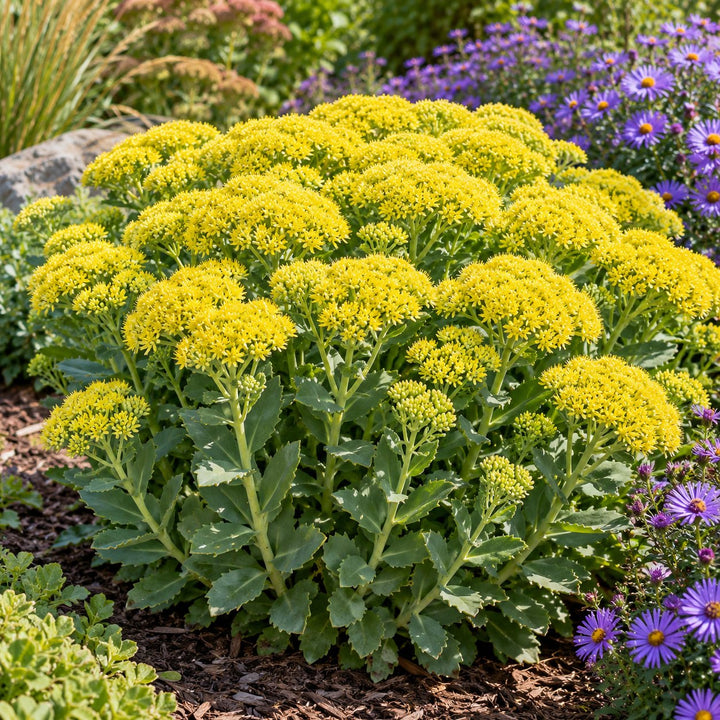
Lemonjade autumn stonecrop breaks from the usual pink of fall sedums. In early September it covers itself in large, domed heads of bright citron-yellow flowers over fleshy, toothed gray-green leaves. As the weather cools, the seed heads take on a rosy tint and stay attractive well into winter.
It is one of the few tall sedums with pale yellow rather than pink flowers, and its compact, stocky habit holds together instead of splitting open at bloom time the way many older sedums do.
Lemonjade at a glance
| Trait | What to expect |
|---|---|
| Botanical name | Hylotelephium 'Lemonjade' (sedum) |
| Flowers | Bright citron-yellow domes of tiny star-shaped florets |
| Foliage | Gray-green, fleshy and toothed |
| Size | 16 to 18 inches tall, 26 to 28 inches wide |
| Bloom | Early September, peaks mid-September |
| Hardiness | USDA zones 3 to 9 |
| Light | Full sun |
| Wildlife | Great late-season pollinator food; moderately deer resistant |
The late shift in a lavender bed
Upright sedum and lavender are built for the same conditions: full sun, lean soil, fast drainage and not much water once established. That makes Lemonjade an easy neighbor that will not ask you to change how you care for the bed.
The payoff is in timing and texture. Lavender peaks in early summer and gets sheared or harvested afterward. Lemonjade is just building its flower heads then, and opens in September when bees are still hunting for food. Its broad, fleshy leaves also contrast nicely with lavender's narrow silver foliage all season. Plant it in groups along the front or middle of the bed, with room for air around each lavender mound. Try spacing in the Companion Plant Planner.
Keeping it upright
- Lean soil: rich soil and extra fertilizer make sedum stems stretch and flop. Average to poor ground is ideal.
- Drainage: it rots in wet, heavy ground, especially in winter.
- Water: regularly the first season, then rarely. It is very drought tolerant.
- Pests: generally trouble-free; watch for aphids and sedum weevil, and leaf spot or mildew now and then.
Winter interest and spring cleanup
Leave the stems and seed heads standing through winter. They catch snow nicely and give the garden some shape when the lavender is a low gray mound. In early spring, as new rosettes appear at the base, cut the old stems back. Good drainage matters far more than mulch for winter survival.
Cutting and drying
Lemonjade is rated good for both cut and dried flowers. Cut heads once they are fully colored and hang them upside down, or let them dry on the plant. A few sedum heads tucked into a bundle of dried lavender give it a fuller, rounder shape.
Frequently asked questions
Will Lemonjade split open in the middle like old sedums?
It is known for a compact, stocky habit that holds together at bloom time. Lean soil and full sun help it stay that way.
Plug tray or bare root?
The 72-cell plug tray suits growers and mass plantings. The bare root plant is a simple way to add a single plant to a home bed. See each product page for current availability.
Does it attract bees?
Yes. Its pollinator rating is great, and its September flowers fill a gap after most summer perennials have finished.

































Share how it went in your field