

Product Field NotesLavender Plants
Linda Ligon Lavender: Variegated Fringed Lavender with Blue Blooms
 Save
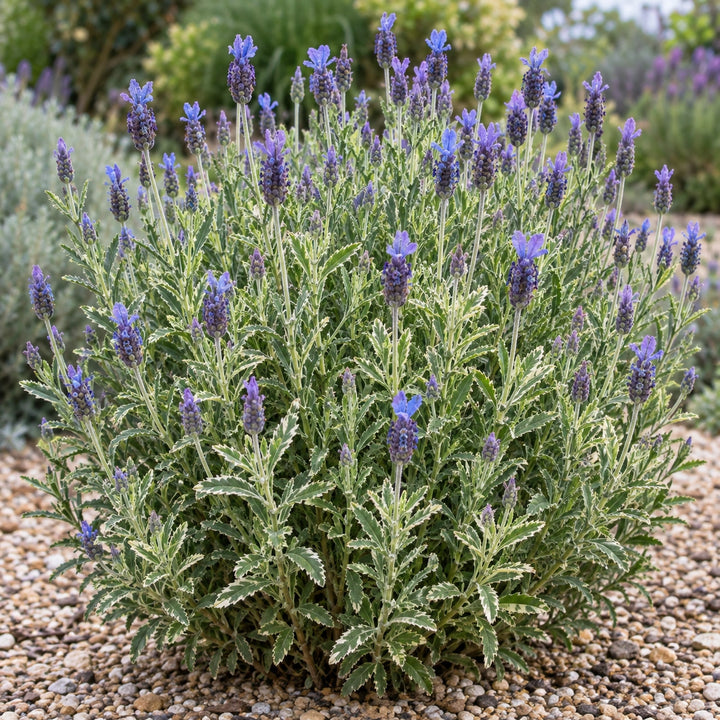
Linda Ligon lavender is a fringed lavender, Lavandula dentata, with a look all its own: toothed leaves splashed with green and white. Variegated lavenders are uncommon, and this one pairs its bright foliage with blue flowers that appear in an everblooming pattern. Its fragrance is rated exceptional, fresh and herbal with eucalyptus-like and lightly floral notes.
Records describe mature plants as compact and upright, reaching about 36 inches tall and 30 inches wide where they grow year-round. Its hardiness rating is USDA zones 9a to 10b, so in Michigan it is a container plant.
Linda Ligon at a glance
| Trait | What to expect |
|---|---|
| Botanical name | Lavandula dentata 'Linda Ligon' |
| Flower color | Blue |
| Foliage | Green and white variegated, toothed |
| Size | Up to about 36 inches tall and 30 inches wide when mature |
| Bloom | Everblooming; year-round in warm climates, peak mid-July |
| Hardiness | USDA zones 9a to 10b |
| Fragrance | Exceptional; fresh herbal, eucalyptus-like, lightly floral |
| Water needs | Low |
Foliage first
Most lavenders are grown for flowers; Linda Ligon is grown for flowers and leaves. The cream-white edges and splashes light up a container even when it is between flushes, and they make the blue flowers look brighter. Use it as the centerpiece of a pot with dark-leaved plants around it, or as a bright accent at the edge of a sunny patio. It wants full sun to bloom well, and in good light the variegation reads from across the yard.
As with many variegated plants, the white portions have less green pigment, so strong light and good growing conditions help keep it vigorous.
Container care
- Pot: 12 to 14 inches for a gallon plant, larger as it grows. Drainage holes are essential.
- Mix: gritty and fast draining.
- Light: full sun outdoors; the brightest spot indoors.
- Water: it has low water needs; let the top inch or two dry between waterings.
- Feeding: light, every few weeks in summer, to support continuous bloom.
- Grooming: clip spent heads and trim any shoots that revert to plain green to keep the variegation strong.
Winter indoors
With a zone 9a to 10b rating, and winter notes advising protection in cold, wet weather, Linda Ligon must come indoors before frost in Michigan. A cool, bright room, sunroom or greenhouse is best. Water sparingly and expect slower growth. It may keep producing a few flowers in good light. Return it outside after your last frost, easing it back into full sun over a week; the Frost Date Estimator gives you the date.
Using it
Cut and dried flower ratings are fair, so this is mainly a fragrance and foliage plant. Variegated sprigs are striking in small arrangements, and the scent fills a room. Its essential oil suitability is rated great. Culinary use is not recommended.
It comes as a 3-inch plug, a 4-inch pot or a 1-gallon pot. See the product page for current sizes and availability.
Frequently asked questions
Why are some shoots turning all green?
Variegated plants sometimes produce plain green shoots. Trim them out at their base to keep the variegated look.
Can Linda Ligon grow outside in Michigan?
Only during the frost-free months. It is rated for zones 9a to 10b and must come indoors for winter.
Is it a French or Spanish lavender?
It is fringed lavender, L. dentata, often sold as French lavender.

































Share how it went in your field