

Product Field NotesCompanion Plants
Marshmallow Moon Hardy Hibiscus: Huge White Saucers for Moist Beds
 Save
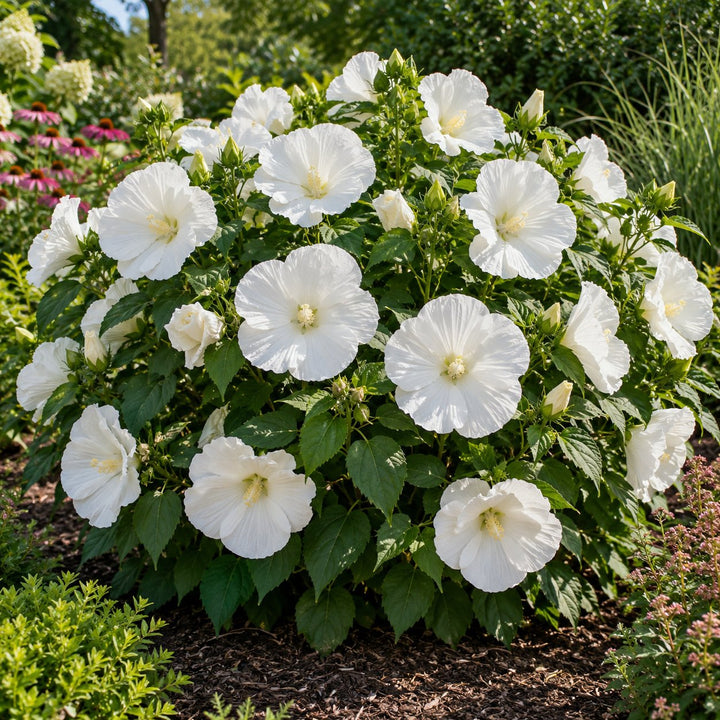
Marshmallow Moon hardy hibiscus is a solid white hardy hibiscus in a well-behaved size. Its saucer-shaped flowers reach 6 to 6½ inches across, pure white throughout with no red eye, and their thick, overlapping petals stand up better to wind and rain than older white types. Buds form along the full length of each stem, so a single plant can carry a lot of flowers over eight weeks or more.
At 3 to 3½ feet tall and about 4 feet wide, it is much tidier than older white hibiscus.
Marshmallow Moon at a glance
| Trait | What to expect |
|---|---|
| Botanical name | Hibiscus 'Marshmallow Moon' |
| Flowers | Pure white saucers, 6 to 6½ inches |
| Foliage | Dark green, three-lobed |
| Size | 36 to 42 inches tall, about 48 inches wide |
| Bloom | Midsummer into early fall, peak early August |
| Hardiness | USDA zones 4 to 9 |
| Light | Full sun for the most flowers |
| Wildlife | Great for pollinators; moderately deer resistant |
Sun like lavender, water unlike it
Hardy hibiscus comes from wetland parent species. It loves the same full sun as lavender but needs steady moisture and should never dry out for long, which would rot lavender in short order. So the two belong in different parts of the garden: lavender in the dry, sunny, fast-draining bed and Marshmallow Moon in a low, moist spot, a rain garden that catches the downspout, or a border you water regularly.
From across the yard, the big white saucers in August make a clean, cool contrast to the silver and purple of lavender. Plan the wet and dry areas in the Companion Plant Planner.
Planting and care
- Soil: it grows in poor to fertile soil as long as moisture is consistent.
- Water: deeply and often in summer; in hot spells, flowering slows and leaves may wilt if the soil dries.
- Pests: Japanese beetles, aphids and sawfly larvae are more common than disease. Check leaves in midsummer.
- Diseases: few serious ones; leaf spots, rust and Botrytis appear in wet seasons, and good airflow helps.
The spring wait
Marshmallow Moon is fully hardy in Michigan but is very late to emerge, often not until late May or June. Many a hardy hibiscus has been dug up by a gardener who assumed it died. Mark its spot in fall, and cut the woody stems back to a few inches in late fall or early spring. When it does wake up, it grows fast.
Plug tray or bare root
The 72-cell plug tray suits growers and large rain garden plantings. The bare root plant is the simple choice for a single statement plant at home. See each product page for current availability.
Frequently asked questions
Do the flowers last?
Each flower is short-lived, but buds open along the whole stem for eight weeks or more, so the plant stays in bloom.
Is it a tropical hibiscus?
No. It is a hardy perennial hibiscus that dies back in winter and returns each year in zones 4 to 9.














Share how it went in your field