

Product Field NotesCompanion Plants
Mighty Chestnut Daylily: Russet Blooms with a Burgundy Eye
 Save
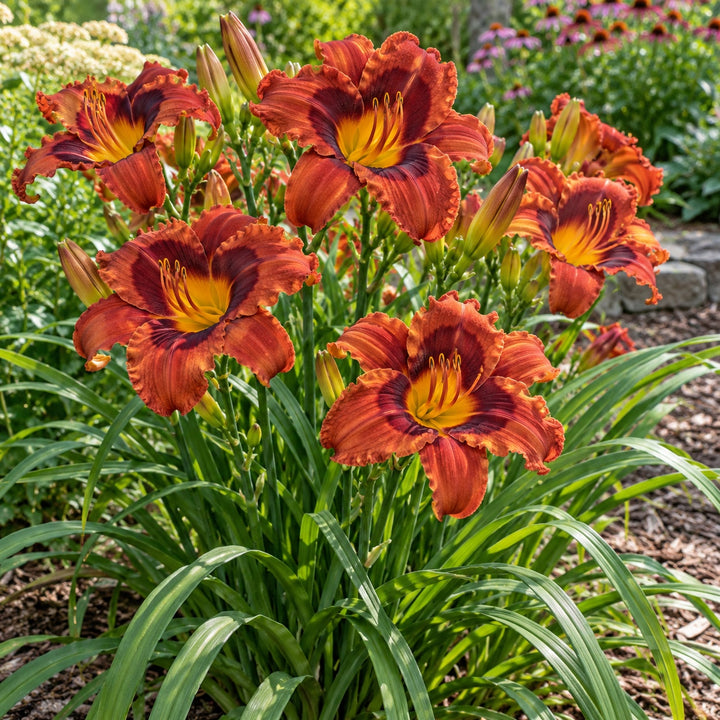
Mighty Chestnut daylily opens big, ruffled flowers in a warm russet red-orange, the color of a freshly shelled chestnut, with a deep burgundy eye and a gold throat. The blooms are fragrant and wide open, and each one stays open for 16 hours or more, which is generous for a flower with a one-day name.
Mighty Chestnut at a glance
| Trait | What to expect |
|---|---|
| Botanical name | Hemerocallis 'Mighty Chestnut' |
| Flowers | 5 to 5 1/2 inches, russet red-orange, burgundy eye, gold throat, fragrant |
| Foliage | Medium green, arching strap-shaped leaves |
| Size | Scapes about 30 inches; foliage 18 inches tall, 18 to 24 inches wide |
| Bloom | Starts mid-July, peaks late July |
| Hardiness | USDA zones 3 to 9 |
| Light | Full sun to light part shade |
An earthy partner for purple
Most lavender pairings lean on whites, pinks and silvers. Mighty Chestnut goes the other way. Its rusty orange and burgundy tones sit across the color wheel from lavender's violet, so the purple looks deeper and the chestnut looks warmer. It is a good choice for a garden near a brick wall, a cedar fence or a weathered barn, where cool pastels can look a little lost.
Daylilies are not as fussy about drainage as lavender, so the easiest arrangement is to set the daylily on the slightly richer edge of a bed and keep the lavender on the sharpest-draining ground. Leave a foot or so between the arching leaves and the nearest lavender so the lavender's base stays dry and sunny.
Planting a bare root daylily
- Prep: soak the roots in water for an hour or so before planting.
- Depth: spread the roots over a small mound of soil and set the crown, where leaves meet roots, about an inch below the surface.
- Water: water thoroughly and keep the soil lightly moist while new leaves push up.
- After that: once established it handles heat, clay and dry spells with little help.
Keeping it tidy through summer
Branched scapes carry plenty of buds, so the show runs for a good stretch in late July while many lavenders are being harvested. Snap off spent blooms in the morning for a cleaner look, and cut bare scapes to the base when the last bud is done. Every few years, when the center of the clump gets crowded and flowering slows, lift and divide it in spring or late summer.
Deer often browse daylily buds, so in open rural gardens a little protection in bloom season helps. Your lavender, conveniently, needs none.
Frequently asked questions
Is Mighty Chestnut fragrant?
Yes. The blooms carry a light fragrance, which is not true of every daylily.
Can it grow in part shade?
It tolerates light part shade, but give it at least six hours of sun for the best flowering.
When will it bloom compared to lavender?
It starts in mid-July and peaks in late July, overlapping the tail end of the main English lavender bloom. Check timing in the Bloom Calendar.

































Share how it went in your field