

Product Field NotesCompanion Plants
Mini Gallery™ Red Lupine: A Bold Block of Early Color
 Save
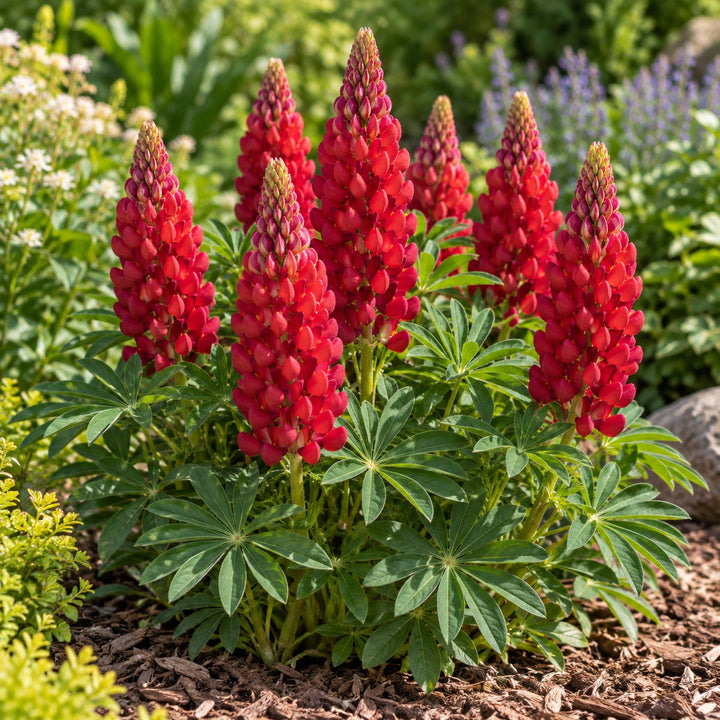
Mini Gallery™ Red lupine puts solid, warm red spikes on a short, sturdy plant about 14 to 16 inches tall. It is one of the earlier lupines to bloom and flowers heavily for its size, with buds a shade deeper than the open florets at the tip of each spike.
Red is a bold choice next to lavender, and that is the point. Used in a confident group, it gives an early-summer bed real punch before the purple arrives.
Mini Gallery Red at a glance
| Trait | What to expect |
|---|---|
| Botanical name | Lupinus polyphyllus Mini Gallery™ Red |
| Flowers | Solid warm red, deeper in the bud |
| Foliage | Green palmate leaves |
| Size | 14 to 16 inches tall, 7 to 9 inches wide |
| Bloom | Early summer, one of the earlier lupines |
| Hardiness | USDA zones 4 to 8 |
| Light | Full sun to light afternoon shade |
| Wildlife | Bees, butterflies and hummingbirds |
Using red with lavender
One red lupine dotted among lavender can look like an accident. A block of five or seven looks like a plan. Plant Mini Gallery Red in a tight group at a corner of a lavender bed, or as a band at the front, and let the silver-gray lavender foliage cool the color down. When the red spikes finish, the lavender opens and the bed shifts from warm to cool.
Silver and gray foliage plants help red look rich rather than loud, so lavender, lamb's ear and artemisia are natural neighbors. Test color blocks in the Companion Plant Planner before planting.
Planting and care
- Drainage first: lupines dislike heavy clay and standing water, the same as lavender.
- Soil: average, leaning slightly acidic; no extra fertilizer needed.
- Cool roots: lupines prefer cool nights and can fade in hot, humid weather. A thin mulch over the lupine roots helps, as long as it stays well away from lavender crowns.
- Deadheading: cut spent spikes before they set seed.
- Placement: choose a permanent spot. The long taproot resents being moved.
Watching for aphids
Lupines can attract aphids that cluster on the upper stems in early summer. A firm spray of water knocks them off, and good air movement around the plants makes them less of a target. Check new growth now and then during bloom.
The plug tray format
Mini Gallery Red is offered as a full 72-cell plug tray, ideal for color blocks, cutting rows and growers. See the product page for current availability, or the Wholesale Hub for tray orders.
Frequently asked questions
Is it good for cutting?
Yes. The spikes are good for cutting. Pick them when the lower florets are open and the tip is still in bud.
Will it bloom again after I cut it back?
Its main show is early summer. Deadheading keeps the plant tidy and stops seed from forming.
Does red clash with purple lavender?
Not when they bloom in sequence and the red is planted as a group. Lavender's silver foliage softens the red even before the lavender flowers.

































Share how it went in your field