

Product Field NotesCompanion Plants
Mission to Mars Mangave: A Red Planet Pot for the Lavender Patio
 Save
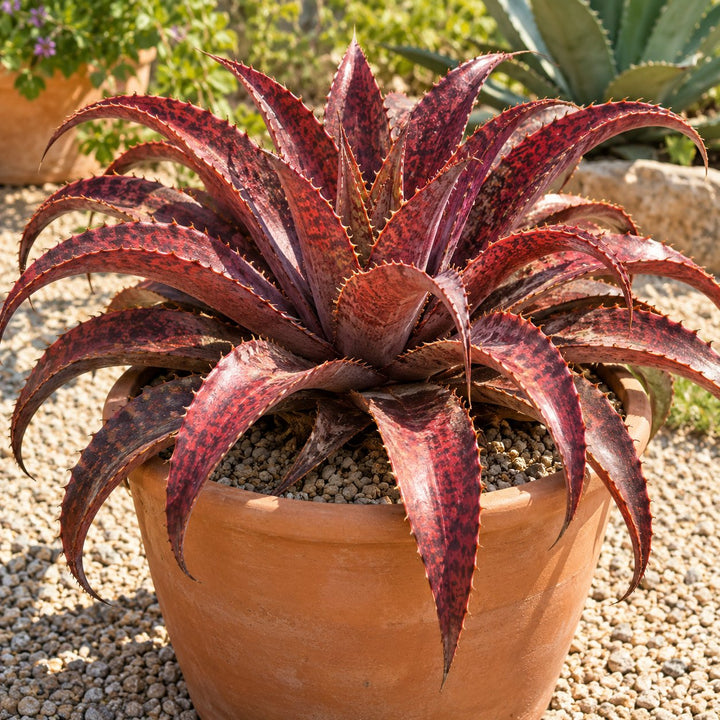
Mission to Mars mangave is named for the Red Planet, and it looks the part. Its thick green leaves are so heavily speckled with burgundy red that the spots merge and the whole plant reads red, strongest in direct sun. The long leaves arch with their tips curving down while the edges curl up to show small cinnamon-brown spines.
It shares lavender's love of hot sun and sharp drainage, but it is not winter hardy here. In the Great Lakes region it is a summer container plant that spends winters indoors.
Mission to Mars at a glance
| Trait | What to expect |
|---|---|
| Botanical name | × Mangave 'Mission to Mars' |
| Foliage | Green, densely speckled burgundy red; leaves about 2 3/4 inches wide |
| Flowers | Rarely flowers |
| Size | Starts about 8 to 10 inches tall; with age 8 to 24 inches tall, 20 to 36 inches wide |
| Hardiness | USDA zones 8 to 10 |
| Light | Full sun |
| Deer | Resistant |
A bold accent for the lavender garden
Lavender is soft, silver and fine-textured. A red, spiky rosette is none of those things, which is exactly why it works as an accent. Set a large pot of Mission to Mars at the end of a lavender row, on a sunny gravel patio or at the top of steps that lead into the beds. The red picks up the warm tones in brick and stone, and the purple lavender looks cooler beside it.
Keep the pot in the same full sun your lavender gets. In shade the red fades and the plant stretches. Try a spot for it in the Companion Plant Planner.
Container care through the year
- Pot: a wide, heavy container with a drainage hole. Unglazed clay helps the mix dry between waterings.
- Mix: gritty, fast-draining soil or cactus mix. Never use heavy garden soil.
- Water: soak the pot when the mix is dry, then let it dry again.
- Fall: bring it indoors before the first frost. The Frost Date Estimator helps you plan.
- Winter: a bright, sunny window and very little water while growth is slow.
- Spring: move it outside once frost danger has passed, easing it into full sun over a week or so to avoid leaf scorch.
Give it room to grow
Mission to Mars starts as a low, arching rosette about 8 to 10 inches tall and nearly 2 feet wide and can reach about 2 feet tall and 3 feet wide with age. Choose a container with room to spare, and site it where people will not brush past the spines. Gloves are a good idea when repotting.
The plug tray format
Mission to Mars is offered as a full 72-cell plug tray, a good fit for growers and anyone potting up mangaves for containers. See the product page for current availability, or the Wholesale Hub for tray orders.
Frequently asked questions
Can I leave it outside over a Michigan winter?
No. It is hardy outdoors only in zones 8 to 10. Bring it indoors before frost.
Why is my plant more green than red?
Not enough sun. The burgundy spotting is strongest in direct sun, so give it the brightest spot you have, indoors and out.















Share how it went in your field