

Use & Care NotesLavender Plants
Munstead Strain Lavender: Classic Purple for Rows and Borders
 Save
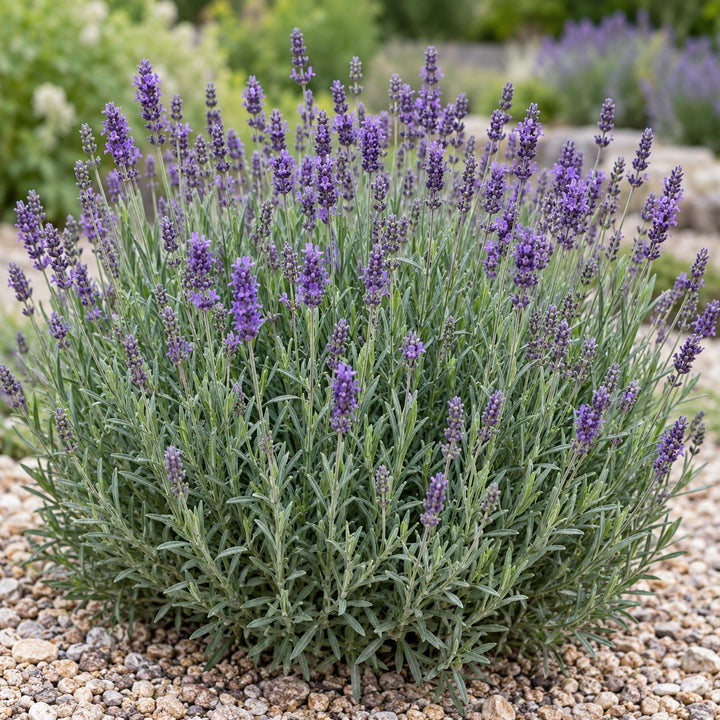
Munstead Strain lavender is a compact English lavender with purple spikes, gray-green foliage and a sweet floral scent with soft herbal notes. It forms an upright, mounding plant roughly 18 to 24 inches tall and about 36 inches wide, which makes it a dependable choice for edging, low hedges and sunny borders.
The word strain is a clue. It usually signals a line raised from seed rather than cuttings, so expect a little natural variation from plant to plant in size and shade, the way a hedgerow looks rather than a row of soldiers.
Munstead Strain at a glance
| Trait | What to expect |
|---|---|
| Botanical name | Lavandula angustifolia 'Munstead Strain' |
| Flower color | Purple |
| Foliage | Gray-green |
| Size | About 18 to 24 inches tall and 36 inches wide; stems about 8 to 12 inches |
| Bloom | Early summer into midsummer; listed timing ranges from early June to mid-July; moderate rebloom |
| Hardiness | USDA zones 5a to 8b |
| Fragrance | Sweet floral, soft herbal, low camphor |
| Culinary | Rated great |
Where it works best
Munstead Strain suits plantings where a soft, informal look is welcome: a long hedge along a fence, a cottage border, a pollinator strip or a row behind a vegetable garden. Slight differences between plants give a natural feel that a single clone cannot. If you need perfectly matched plants for a formal knot garden, a named cutting-grown cultivar is the better choice; for everything else, this is classic English lavender at its most relaxed.
Planting a row or hedge
- Prepare the bed: full sun and loose, fast-draining soil. In clay, build a raised or mounded row.
- Space: two and a half to three feet apart for a hedge that knits together without crowding.
- Plant: set crowns level with the soil, water deeply and keep wood mulch away from the base.
- Establish: water when the top few inches dry during the first season, then cut back; water needs are low.
Check timing with the Frost Date Estimator before planting.
Care through the seasons
In spring, wait for new green growth before trimming away winter-damaged tips. After the main bloom, shear the whole row lightly to keep the mounds round, cutting into leafy stems but not into bare old wood. A moderate rebloom may follow. Skip heavy fertilizer, which leads to floppy growth. In winter, sharp drainage is what keeps English lavender alive, so avoid piling leaves or wet mulch on the crowns.
Harvest and uses
Munstead Strain is rated great for culinary use. For buds, cut on a dry morning when spikes are colored but only a few flowers have opened; dry in the shade and store airtight. Use only plants grown and handled as a food crop, and begin with small amounts. Its essential oil suitability is rated excellent, and its stems work well in small dried bundles and sachets.
It is offered as 3-inch plugs, 4-inch pots and 1-gallon pots. See the product page for current sizes and availability.
Frequently asked questions
What is the difference between Munstead and Munstead Strain?
Both are compact English lavenders. Munstead Strain is typically seed-raised, so plants can vary slightly, while named Munstead plants are generally more uniform.
How tall will it get?
Listings put it between about 18 and 24 inches tall, with a spread near 36 inches.
Is it a good hedge lavender?
Yes. Its compact, mounding habit makes it a natural for low hedges and edging.
















Share how it went in your field