

Product Field NotesCompanion Plants
Pacific Hybrids English Primrose: Jewel Colors for Spring Shade
 Save
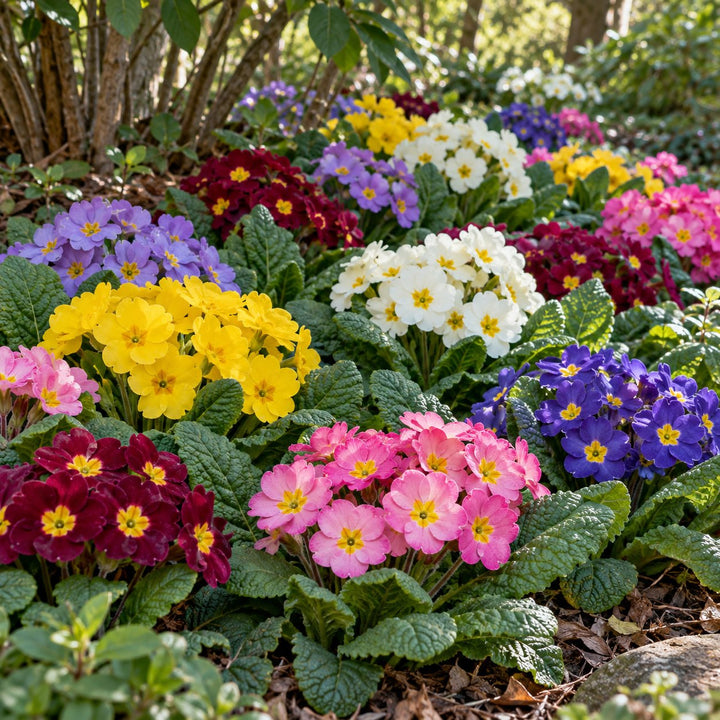
Pacific Hybrids English primrose is a classic seed-grown mix known for big flowers in clear, saturated colors: yellow, maroon, lavender, white, pink and blue-violet, most with a bright contrasting eye. Because colors vary plant to plant, a group of them turns into a patchwork carpet in mid-spring, long before the lavender has even thought about blooming.
Pacific Hybrids at a glance
| Trait | What to expect |
|---|---|
| Botanical name | Primula × polyantha Pacific Hybrids |
| Flowers | 1.5 to 2 inches, mixed colors with contrasting eyes |
| Fragrance | Light, sweet primrose scent up close |
| Foliage | Low rosette of crinkled, tongue-shaped, mid-green leaves |
| Size | 6 to 8 inches tall, 6 to 12 inches wide |
| Bloom | Mid to late April, single flush |
| Hardiness | USDA zones 3 to 8 |
| Light | Part to full shade |
The shady side of a lavender garden
We will be straight with you: a primrose planted in a sunny lavender bed will fry by July. Lavender wants heat and dry roots; primroses want cool soil that never dries out. They are companions in the sense of sharing a property, not a bed.
That is still a useful partnership. Most sunny gardens have a shaded front walk, a strip under a tree or a north-facing foundation bed. Filling those spots with spring primroses means color arrives in April, weeks before the lavender wakes up, and the shady corners look cared for while the sunny beds are still bare. The Companion Plant Planner helps you map sun and shade on one plan.
Planting and care
- Soil: humus-rich and evenly moist, never waterlogged. Soggy soil causes crown rot.
- Summer: primroses dislike heat and drought. Leaves may wilt or go semi-dormant, so keep the soil moist through July and August.
- Spacing: give plants room for air to move; crowded leaves in muggy weather can get gray mold or leaf spots.
- After bloom: remove spent flower stems, and divide clumps every few years right after flowering.
- Pests: slugs, aphids and spider mites are the usual visitors.
Winter in Michigan
They overwinter well in moist, well-drained soil. Plant by early fall so roots can settle, and use a light leaf mulch in exposed spots to keep freeze-thaw cycles from heaving the crowns out of the ground.
Pots and window boxes
Pacific Hybrids are a favorite for spring containers and shaded window boxes. A pot of mixed primroses by a shady door is an easy early-season welcome. The 72-cell plug tray gives you enough plants for a real mass planting or several containers; see the product page for current availability.
Frequently asked questions
Can I choose specific colors?
This is a seed-grown mix, so colors vary from plant to plant. That variety is the charm of a group planting.
Do deer eat primroses?
They are moderately deer resistant, so they are browsed less than many spring flowers.

































Share how it went in your field