

Product Field NotesCompanion Plants
Peach Blossom Astilbe: Soft Peach Plumes for Damp Shade
 Save
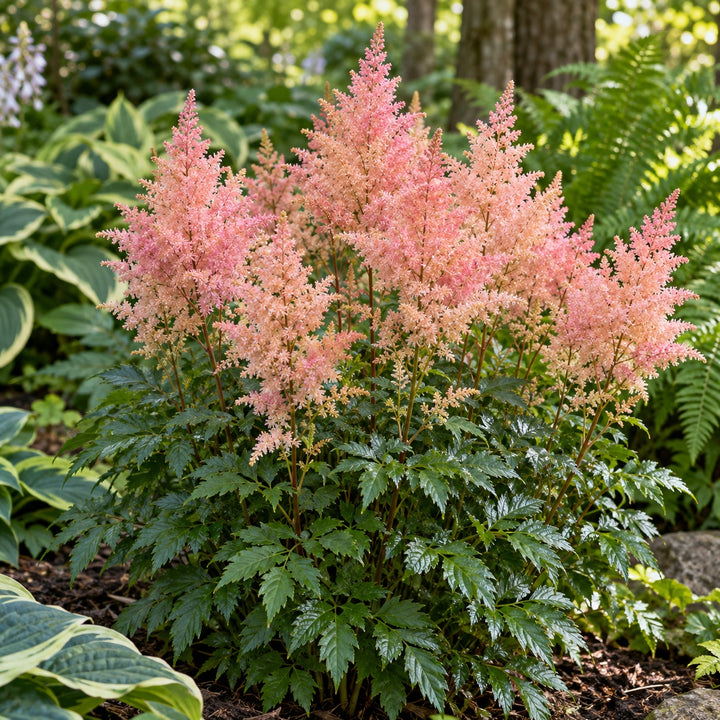
Peach Blossom astilbe carries full, fluffy, pyramid-shaped plumes of tiny soft peach flowers with a pink blush, held above glossy green, toothed leaves. The warm peach is a gentle change from the usual pinks and reds of astilbe, and it is one of the earlier ones to bloom.
The clump stays neat and upright at about 2 feet tall, and deer and rabbits leave it alone.
Peach Blossom at a glance
| Trait | What to expect |
|---|---|
| Botanical name | Astilbe japonica 'Peach Blossom' |
| Flowers | Plumes 6 to 8 inches long, soft peach with a pink blush |
| Foliage | Glossy green, compound and toothed |
| Size | About 24 inches tall, 15 to 18 inches wide |
| Bloom | Early to mid-June, single flush |
| Hardiness | USDA zones 4 to 9 |
| Light | Part shade best; more sun in the north if kept moist |
| Deer and rabbits | Resistant |
The other half of the garden
We grow lavender for a living, so take this as friendly advice: astilbe in a lavender bed is a recipe for crispy astilbe. It wants damp, rich soil and shade, while lavender wants lean, dry, open sun. The two do not share a bed, but they can share a plan. Put Peach Blossom along a damp woodland edge, a shaded side yard or under trees with hostas and ferns, and keep the lavender out in the sun.
Both bloom around June, so the sunny and shady parts of the yard peak together: purple spikes in one spot, soft peach plumes in another. The Companion Plant Planner helps map those zones.
Planting and care
- Soil: rich and humus-heavy, never allowed to dry out.
- Mulch: a layer of shredded leaves or compost holds moisture.
- Water: during dry spells. Drought leaf scorch is the most common problem.
- Pests: Japanese beetles and foliar nematodes turn up occasionally; mildew and leaf spot can appear in stagnant air.
- Every few years: crowns slowly rise above the soil, so top-dress with compost or lift and divide.
Plumes for cutting and drying
The plumes rate well for both fresh and dried use. Cut them as they open for bouquets, or leave them on the plant, where they fade to cream and tan and hold their shape into winter. Cut the dried stems back in spring before new growth.
Planting the bare root
Set the crown just at or slightly below the soil surface with the roots spread out, water well and keep the soil moist while it settles. See the product page for current availability.
Frequently asked questions
Can astilbe take any sun?
In northern gardens it can handle more sun if the soil stays consistently moist. Dry sun leads to crisp, brown leaves.
Does it rebloom?
No. It has one main flush in June, followed by long-lasting dried plumes.















Share how it went in your field