

Use & Care NotesCompanion Plants
Plum Rosy False Indigo: Mauve and White Spikes in Lavender Soil
 Save
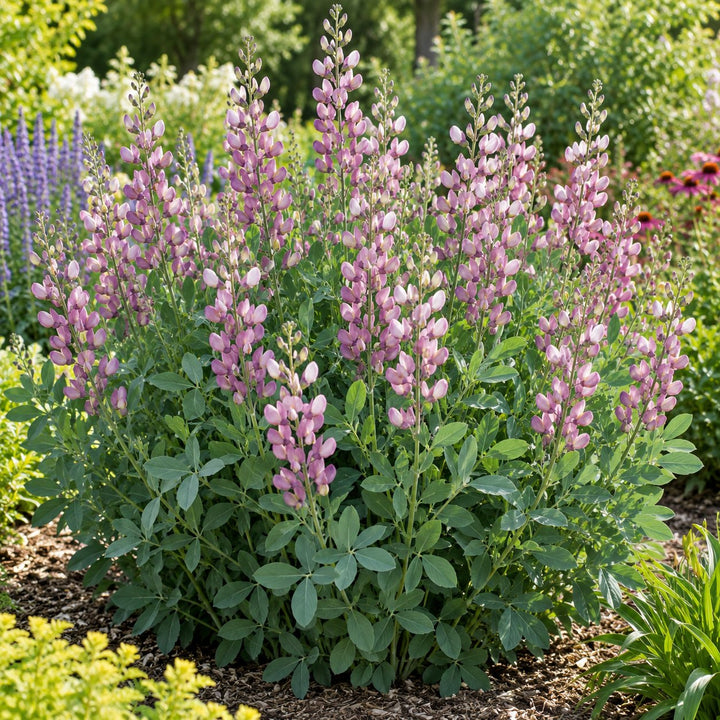
Plum Rosy false indigo is a two-tone false indigo with a softer palette than most. Its newest flowers open mauve pink and fade toward near white as they age, so each 10- to 12-inch spike blends both shades. Underneath sits a full, rounded mound of blue-green leaves that grows three and a half to four feet in each direction.
It thrives in exactly the dry, lean, sunny ground that lavender loves, and its mauve tones blend into lavender's purple as one bloom season hands off to the next.
Plum Rosy at a glance
| Trait | What to expect |
|---|---|
| Botanical name | Baptisia 'Plum Rosy' |
| Flowers | Mauve pink fading to near white, both on each spike |
| Foliage | Three-parted, oval blue-green leaflets |
| Size | 42 to 48 inches tall and wide |
| Bloom | Starts late May, peaks early June |
| Hardiness | USDA zones 4 to 9 |
| Light | Full sun to part shade |
| Wildlife | Great for pollinators; deer leave it alone |
A statement plant instead of a shrub
Lavender plantings often need one bigger element to anchor them: something at a corner, the end of a row or the center of a round bed. Many people reach for a shrub. Plum Rosy does the same job, with a late-spring bloom show on top. Its blue-green mound stays full after flowering, giving the lavender a cool, leafy backdrop all summer.
Color-wise, it is one of the gentlest false indigos to pair with lavender. Mauve and near-white flowers sit easily next to any lavender, from deep violet to pale pink. Leave enough room that it never shades the lavender, and test the layout in the Companion Plant Planner.
What the first few years look like
- Year one: the plant puts most of its energy into a deep taproot. Top growth may look modest. Water through dry spells.
- Year two: more stems and the first good flush of spikes.
- After that: a full, shrub-sized plant that is very drought tolerant and lives for many years. Do not dig or divide it once it is settled.
Seasonal upkeep
There is not much. Give it room for air so the leaves stay clean in humid summers. In a hot spring, each spike passes a little faster. In late fall, cut the stems down, or leave the dark seed pods standing for winter interest. It is fully hardy in Michigan without winter protection, as long as the soil does not stay soggy.
From the garden to the vase
The spikes are good cut flowers, and the seed pods dry fairly well for fall arrangements alongside dried lavender.
Plug tray or bare root
Plum Rosy comes as a 72-cell plug tray for growers and large plantings, and as a bare root plant for direct planting. See each product page for current availability.
Frequently asked questions
Can I move Plum Rosy if I change my mind?
Moving an established plant is risky because of the deep taproot. Choose its spot carefully the first time.
Is false indigo toxic?
It contains alkaloids and is considered mildly toxic if eaten. Grow it as an ornamental only.



Share how it went in your field