

Use & Care NotesCompanion Plants
PowWow Wild Berry Coneflower: Berry Color That Outlasts Lavender
 Save
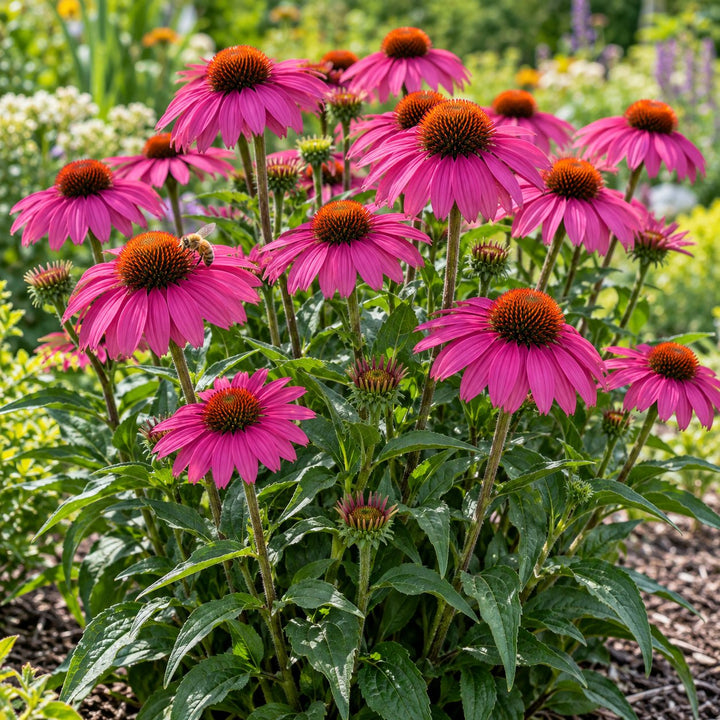
PowWow Wild Berry coneflower packs saturated berry color onto a short, stocky plant. Its deep magenta-pink petals hang slightly around a raised bronze-orange cone, and unlike many coneflowers, older blooms keep the same color as new ones, so the clump looks evenly vivid from early through late summer.
It earned an All-America Selections Flower Award in 2010 for its color, branching and compact size. In a lavender garden, those berry tones echo the purple while adding a warmer, richer note.
Wild Berry at a glance
| Trait | What to expect |
|---|---|
| Botanical name | Echinacea purpurea 'PowWow Wild Berry' |
| Flowers | Deep magenta-pink, 3 to 4 inches across, bronze-orange cone |
| Foliage | Dark green, lance-shaped, slightly rough |
| Size | 18 to 24 inches tall, 12 to 16 inches wide |
| Bloom | Starts late June, peaks mid-July, continues through summer |
| Hardiness | USDA zones 3 to 8 |
| Fragrance | Light, faintly sweet |
| Wildlife | Excellent for bees and butterflies; seeds feed songbirds; deer resistant |
Keeping the color going
Here is the usual July problem in a lavender garden: you harvest your bundles, and the bed suddenly looks a little bare. Wild Berry is a tidy answer. It opens in late June, peaks in mid-July and keeps blooming through late summer, filling the gap with color that sits naturally beside purple. Plant groups of three or five between lavender clumps or in a drift just behind them.
Its heavily branched stems hold many flowers at once in a bouquet-like dome, and at about two feet tall, it pairs well with most English lavenders. Plan the drifts in the Companion Plant Planner.
A season of care
- Planting: by late summer, so roots establish before winter. Wet winter soil is the most common cause of loss for hybrid coneflowers.
- Summer: water during the first season. Once established it handles dry spells with little extra water.
- Deadheading: snip faded flowers through summer to encourage more.
- Late season: stop deadheading and let the last flush form seed heads for birds.
- Winter: leave the stems standing and keep heavy mulch off the crown.
Problems to watch for
Aster yellows, spread by leafhoppers, can cause distorted green flowers; remove affected plants. Crown and root rot happen in wet, poorly drained soil, which is one more reason this plant and lavender get along so well. Crowded plants in damp shade may pick up leaf spot or powdery mildew, so give them sun and air.
About the plug tray
Wild Berry is offered as a 72-cell plug tray, a practical choice for mass plantings, pollinator borders and containers. See the product page for current availability.
Frequently asked questions
Does Wild Berry fade as the flowers age?
It holds its color better than many coneflowers, though flowers can fade a bit faster in extreme heat.
Is it good for cutting?
Yes. It is a good cut flower and dries well. The cones also hold up nicely in dried arrangements with lavender.
How is it different from PowWow White?
Same compact size and first-year bloom, but deep berry magenta flowers with a bronze-orange cone instead of white with gold.
















Share how it went in your field