

Product Field NotesCompanion Plants
Prima Belarina Carnival Primrose: Coral and Gold for Spring Shade
 Save
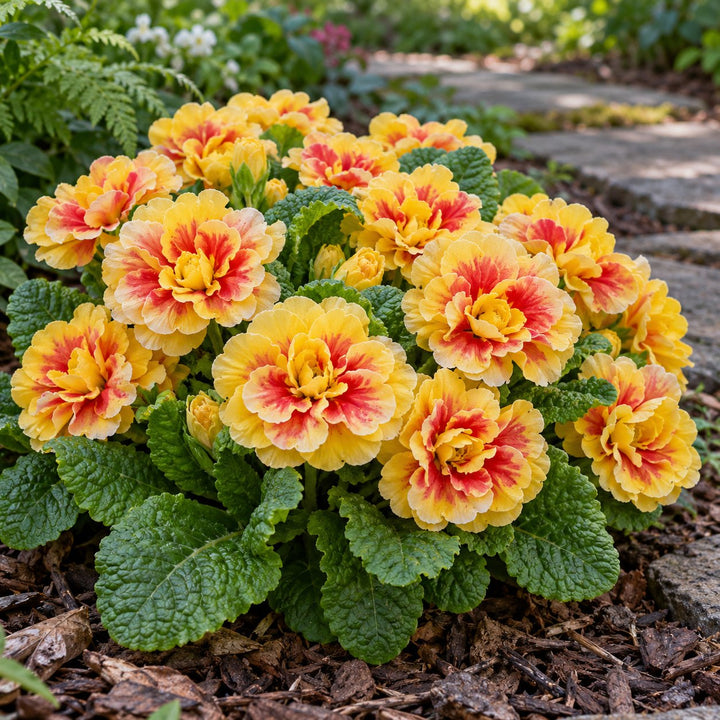
Prima Belarina® Carnival primrose has some of the largest flowers you will find on a garden primrose, 2 to 2.5 inches across and fully double. Each layered bloom is golden yellow brushed with coral red toward the center and fading to a pale cream edge. In April they crowd so tightly that the crinkled green leaves nearly disappear.
Primroses want cool shade and steady moisture, so this is a plant for the shady corners of your property, not the lavender field. Think woodland edge, shaded front walk or the north side of the house.
Carnival at a glance
| Trait | What to expect |
|---|---|
| Botanical name | Primula vulgaris Prima Belarina® Carnival |
| Flowers | Fully double, 2 to 2.5 inches, golden yellow with coral red and pale edges |
| Foliage | Low rosette of crinkled, bright green leaves |
| Size | 5 to 8 inches tall, 10 to 12 inches wide |
| Bloom | Starts early April, peaks late April |
| Hardiness | USDA zones 4 to 8 |
| Fragrance | Light, sweet primrose scent up close |
| Deer | Moderately resistant |
The first color of the year
Lavender is a summer plant. In early April, a lavender bed is a row of gray mounds waiting for warmth. Carnival is already in full swing then, and its warm coral and gold make the shady side of the yard the place to look. Because its flowers are sterile, the display lasts for weeks.
Plant it in groups under shrubs, along a shady path, or in spring containers by the door. It is compact enough to edge a shade bed without hiding anything behind it. Sort your sunny and shady areas in the Companion Plant Planner so lavender and primroses each get the right spot.
Keeping primroses happy
- Shade and moisture: part to full shade, in humus-rich soil that stays evenly moist, especially while blooming.
- Summer heat: primroses dislike heat and drought. Leaves may wilt or go semi-dormant in hot summers, so keep the soil moist through July and August.
- Air: space plants so leaves dry off. Muggy, crowded conditions invite gray mold and leaf spots.
- Pests: aphids, spider mites and slugs are the usual visitors.
- Every few years: divide crowded clumps after bloom.
Getting through winter
Carnival overwinters in Michigan in moist, well-drained soil. Plant by early fall so roots establish, and use a light leaf mulch in exposed spots to prevent frost heaving. Soggy winter soil causes crown rot.
About the plug tray
It is offered as a 72-cell plug tray, a good way to fill a shady border or a set of spring pots. See the product page for current availability.
Frequently asked questions
Can I grow primroses with my lavender?
Not in the same bed. Lavender needs hot sun and dry soil, and primroses need cool shade and moisture. Plant them in separate parts of the garden.
Do primroses attract pollinators?
Their pollinator value is low, especially for these double, sterile flowers. Grow them for early color.

































Share how it went in your field