

Product Field NotesLavender Plants
Purple Bouquet Lavender: Sweet English Spikes on a Wide Mound
 Save
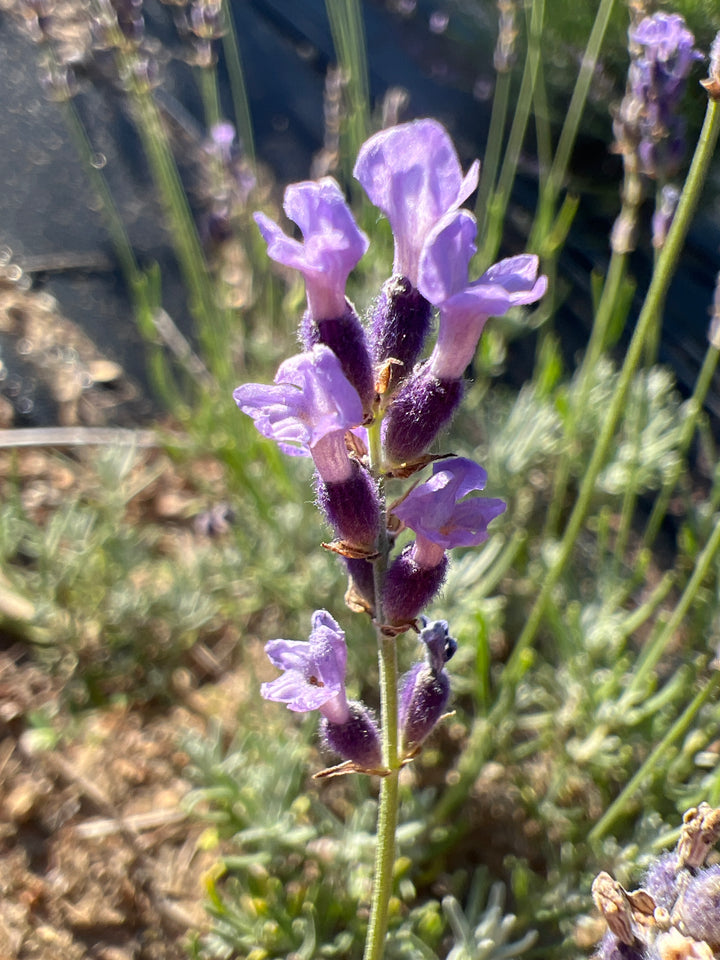
Purple Bouquet lavender is an English lavender that grows into a broad, upright mound of green foliage topped with purple spikes. Its fragrance is strong but friendly: sweet, floral and soft around the edges, without the sharp camphor bite of the big lavandins.
The name is honest advertising. A single established plant throws enough stems for a generous handful, and because it is Lavandula angustifolia, it brings the cold tolerance that Great Lakes gardeners need.
Purple Bouquet at a glance
| Trait | What to expect |
|---|---|
| Botanical name | Lavandula angustifolia 'Purple Bouquet' |
| Flower color | Purple |
| Foliage | Green, upright habit |
| Mature size | About 24 inches tall and 36 inches wide |
| Bloom | Starts early June, peaks mid-June, moderate repeat bloom |
| Hardiness | USDA zones 5a to 9b |
| Fragrance | Strong, sweet floral with soft herbal notes and low camphor |
| Best uses | Essential oil, fragrance, culinary, bundles |
Where it fits in the garden
Purple Bouquet is wider than it is tall, which makes it a natural for low hedges along a sunny walk or for a row at the front of a bed where it can spill a little. Its green foliage is greener than the silver lavenders, so it pairs nicely with gray-leaved cultivars when you want a bit of contrast in a mass planting.
Because it blooms early in the English lavender season, it also works as the opening act in a bed that steps through the summer with later lavandins. The Bloom Calendar helps you line up that kind of succession.
Planting and spacing
Plan for the full 36-inch spread. Lavender planted too close looks great for one season and then crowds itself into damp, stagnant air, which is exactly what it does not want. Choose a spot with six or more hours of direct sun and soil that drains within minutes after a heavy rain. Sandy loam is ideal; clay calls for a raised bed or a mound.
Set the plant with its crown level with the soil, firm it in and water the root zone deeply. Use gravel or nothing at all around the base instead of bark mulch, which holds moisture against the stems.
Care through the seasons
- Spring: wait for new green growth before trimming out any winter damage, so you can see what is alive.
- Early summer: enjoy the main flush, and cut what you want for bundles or the kitchen.
- After bloom: shear the spent stems and shape the mound, staying above the woody base. This is what invites the moderate rebloom.
- Late summer and fall: water only in long dry spells. Skip fertilizer; lean soil keeps the plant tight.
- Winter: good drainage is the best protection. Wet feet do more damage than cold.
Harvesting for the kitchen, oil and crafts
Purple Bouquet is rated great for culinary use and excellent for essential oil, which is a useful combination for a small grower. For cooking, cut stems when the buds are colored but before most flowers open, dry them in a shaded, airy place and rub off the buds. Grow and handle any lavender for eating as a food crop, and start with a pinch; lavender gets soapy fast when overused.
For fragrance crafts, stems cut at the same stage dry with good color and a sweet scent that suits sachets and drawer bundles. It is rated good for both fresh and dried bouquets.
Choosing a size
The listing offers 3-inch plugs, 4-inch pots and 1-gallon pots. Plugs are the budget-friendly way to plant a hedge and need closer watering at first; gallon plants give you a fuller look in the first season. See the product page for current sizes and availability.
Frequently asked questions
Is Purple Bouquet good for cooking?
Yes. It is an English lavender rated great for culinary use, with a sweet, low-camphor profile. Use buds grown as a food crop and use them sparingly.
How far apart should I plant it for a hedge?
Space plants close to their mature width of about three feet. For a slightly denser look you can go a little tighter, but keep enough gap for air to move.
Do deer or rabbits eat it?
Purple Bouquet is rated deer resistant, and its scent tends to send browsers elsewhere. Bees, on the other hand, will find it immediately.

































Share how it went in your field