

Product Field NotesCompanion Plants
Red Velvet Bee Balm: Big Cherry Heads for the Pollinator Bed
 Save
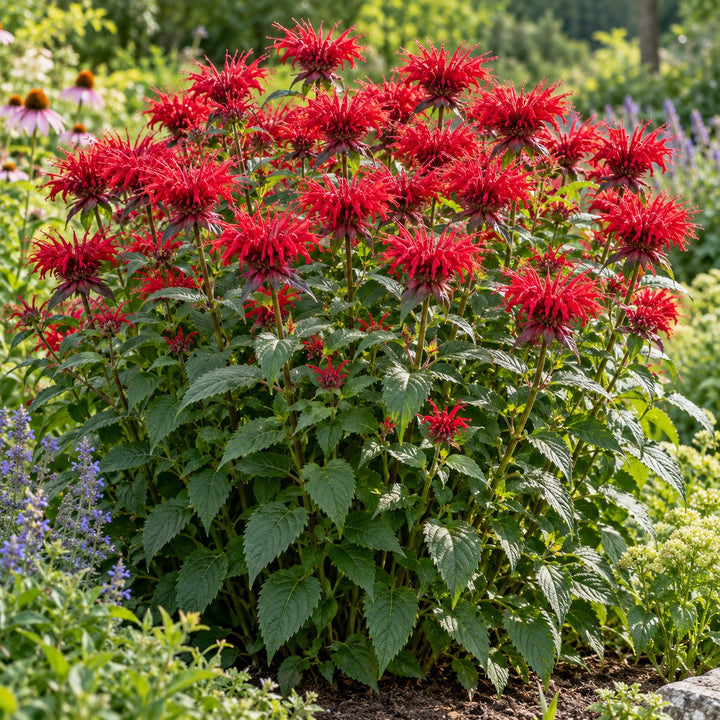
Red Velvet bee balm is a vigorous Monarda with large, shaggy flower heads in intense cherry red, set on dark reddish bracts. New growth comes up with a bronze tint before turning dark green, and once the first heads finish, side shoots open a second round. At about 32 inches tall and 3 feet wide, it is the tallest of its group and big enough to stand as a specimen.
Red Velvet at a glance
| Trait | What to expect |
|---|---|
| Botanical name | Monarda 'Red Velvet' |
| Flowers | Large cherry red heads on dark red bracts |
| Foliage | Dark green with bronze-tinted new growth; minty, oregano-like scent |
| Size | About 32 inches tall, 36 inches wide |
| Bloom | Early July, peaking late July, with a repeat flush |
| Hardiness | USDA zones 4 to 8 |
| Light | Full sun to part shade |
| Wildlife | Excellent for pollinators; a hummingbird favorite; deer resistant |
A neighbor, not a bed-mate
Bee balm and lavender are both pollinator magnets, and both love sun, so it is tempting to plant them together. The catch is water. Bee balm under drought stress gets powdery mildew, while lavender with wet roots declines. The answer is a neighboring bed: lavender on the lean, dry side, Red Velvet a few steps away in average to fertile soil you can water.
Set up that way, the bees and hummingbirds work both plantings, and the cherry red heads carry the color on after lavender's first flush. Lay out the two beds in the Companion Plant Planner.
Planting and care
- Soil: average to fertile, with regular water, especially in summer dry spells.
- Airflow: space plants generously and thin a few stems in spring if the clump is dense. It was bred for good mildew resistance, and airflow helps further.
- Deadheading: cut faded heads back to the side shoots for a second round.
- Spreading: it widens by shallow rhizomes. Divide every two to three years in spring to keep the center vigorous.
- Winter: very hardy in Michigan. Cut stems back in fall or leave them until spring.
Cutting and kitchen use
Red Velvet rates good as a cut flower; the big red heads look striking in a vase with fresh lavender stems. Like other bee balms, its leaves and flowers are edible and are used for herbal tea or as a colorful garnish. Use only plants you have grown without sprays, and start with small amounts, since the flavor is strong.
About the plug tray
It is offered as a full 72-cell plug tray, a good fit for pollinator plantings and for growers potting up their own stock. See the product page for current availability.
Frequently asked questions
What does it smell like?
Brush the leaves and you get a strong minty, oregano-like scent. The flowers themselves are not especially fragrant.
Will it take over?
It spreads steadily but shallowly, so it is easy to pull or divide. Plan on dividing every few years.

































Share how it went in your field