

Product Field NotesCompanion Plants
Rheinland Astilbe: Early Pink Plumes Where Lavender Cannot Go
 Save
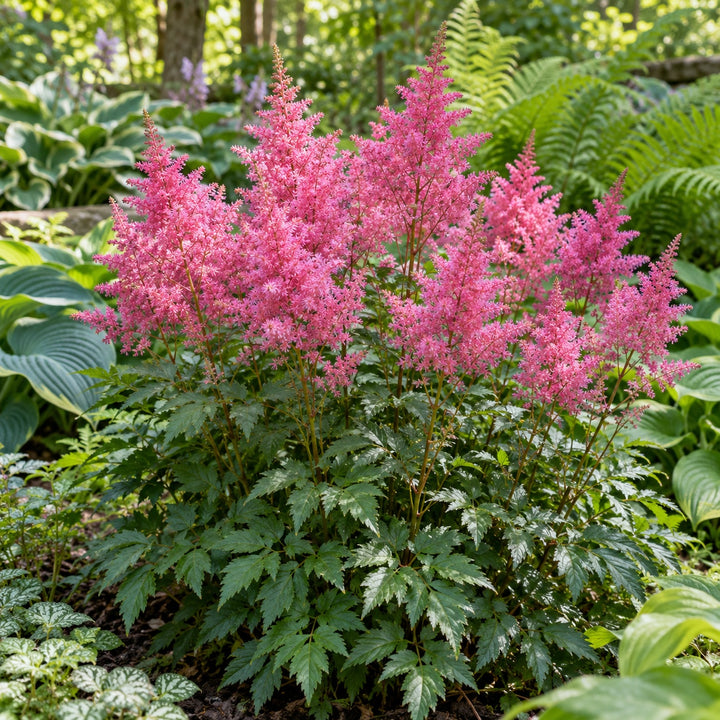
Rheinland astilbe is a classic early pink, still grown widely because it is vigorous and very free flowering. Large, diamond-shaped plumes of clear rose pink rise above bold, slightly glossy mid-green leaves in early June. It holds the Royal Horticultural Society's Award of Garden Merit, a good sign that it performs year after year.
Rheinland at a glance
| Trait | What to expect |
|---|---|
| Botanical name | Astilbe japonica 'Rheinland' |
| Flowers | Clear rose pink plumes, 6 to 8 inches long, aging to tan |
| Foliage | Large, bold, mid-green with a slight gloss |
| Size | About 24 inches tall, 16 to 20 inches wide |
| Bloom | Early to mid-June |
| Hardiness | USDA zones 4 to 9 |
| Light | Part shade; more sun only with constant moisture |
| Deer and rabbits | Resistant |
Planning it into a lavender garden
Rheinland and lavender do not share a bed. Lavender's lean, dry, sunny ground would scorch an astilbe in a week of July heat, and astilbe's moist, rich soil would rot lavender roots. The way to pair them is across the yard: lavender where the sun is strongest, Rheinland in the cool shade of trees or a north wall.
Because Rheinland is one of the earliest astilbes, it opens in early June, a little before most lavender. Mass a group of five or more for a sweep of pink, and edge it with hostas and ferns. Lay out both the sun and shade areas in the Companion Plant Planner.
Planting the bare root crowns
Rheinland arrives as a dormant bare root plant. In spring, plant it in humus-rich soil with the buds just below the surface, about 18 to 20 inches apart for massing. Water thoroughly and keep the soil consistently moist as the first leaves unfurl.
Care through the year
- Moisture: constant. Mulch the root zone and water in every dry spell to prevent leaf scorch, the most common astilbe problem.
- Airflow: give each clump space; crowded plants in muggy weather can get mildew or leaf spot.
- After bloom: leave the plumes. They age to a warm tan and look good into winter.
- Spring: cut old stems down as new growth begins.
- Every few years: crowns creep upward over time. Top-dress with compost or divide.
For the vase and drying rack
Rheinland rates good both fresh and dried. Cut stems when half the flowers on a plume have opened for fresh use. For drying, wait until the plumes are fully open, then hang them in a dark, airy spot.
Frequently asked questions
How early does it bloom compared to other astilbes?
It is among the first, opening in early June and peaking by mid-June. Pair it with later astilbes to stretch the season.
Can it take morning sun?
Yes, if the soil stays moist. Afternoon shade is what protects the leaves in summer.

































Share how it went in your field