

Product Field NotesLavender Plants
Riverina Alan Lavender: A Big Lavandin Built for Oil and Bundles
 Save
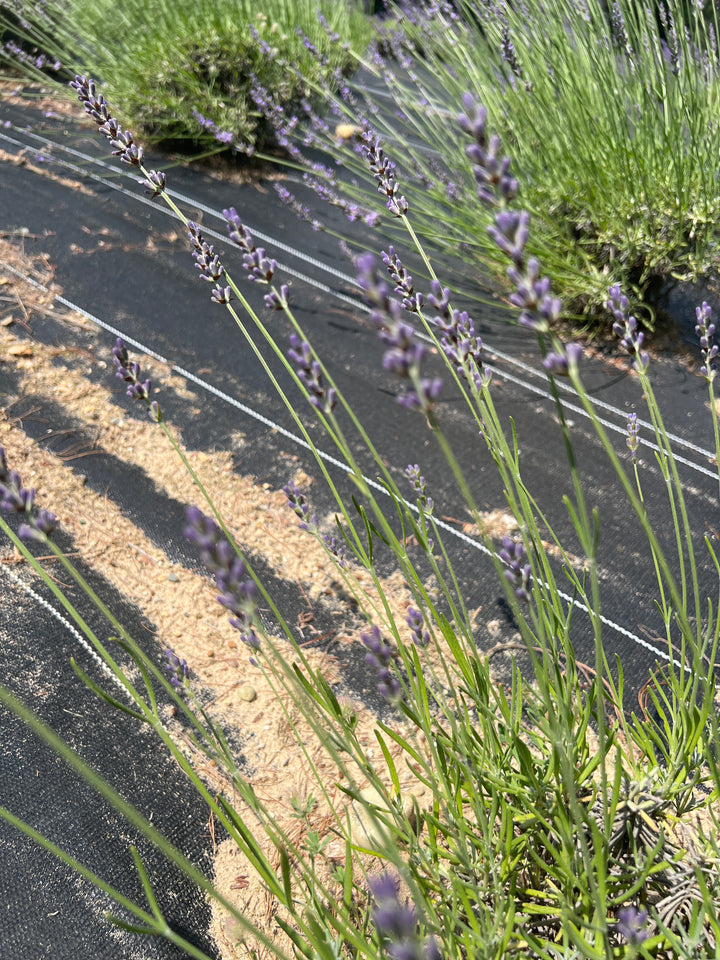
Riverina Alan lavender is a lavandin, the vigorous hybrid of English lavender and spike lavender, and it grows like one. The listing puts it at about 48 inches tall and 60 inches wide, with purple flowers on stems around 30 inches long rising from gray foliage. Its scent is strong and floral-herbal, sweet lavender layered with fresh camphor.
This is not a windowsill lavender. It is the one you plant when you want armloads.
Riverina Alan at a glance
| Trait | What to expect |
|---|---|
| Botanical name | Lavandula × intermedia 'Riverina Alan' |
| Parentage | English lavender × spike lavender |
| Flower color | Purple |
| Foliage | Gray |
| Habit | Upright and vigorous |
| Mature size | About 48 inches tall and 60 inches wide |
| Stem length | About 30 inches |
| Bloom | Single flush in mid-July, low rebloom |
| Hardiness | USDA zones 5a to 9b |
| Ratings | Excellent for oil, cut flowers, dried flowers and field production |
Who should grow it
Riverina Alan earns its space where you can use the harvest. It is rated excellent for essential oil and high oil production, excellent for cut and dried flowers, and excellent as a commercial field lavender. Small farms, market growers and anyone who makes wreaths or wands will appreciate the stem length. In a home landscape, one or two plants make a dramatic, billowing specimen at the back of a sunny border or anchoring the corner of a driveway.
Spacing a plant this size
The biggest mistake with large lavandins is underestimating them. Plan for the full five-foot spread, plus a little extra if you want to walk between plants at harvest. In rows, many growers leave enough room between rows for a mower or a person with a bucket. Crowded lavandins hold humidity in their centers and decline early.
Plant in full sun with soil that drains fast. On heavier ground, raised rows or berms make a real difference. Water deeply during the first season, then cut back; established plants have low water needs.
Harvest and drying
For bundles, cut when the lowest few flowers on each spike have opened and the rest are colored buds. That stage holds color and keeps buds attached after drying. Cut long, gather stems into bunches of a size you can wrap with one hand, secure them with a rubber band (stems shrink as they dry) and hang them upside down somewhere dark and airy.
For oil, growers usually harvest a little later, when more flowers are open. Plan your windows with the Harvest Calendar.
Pruning a big lavandin
After harvest, shear the plant back into a rounded shape, leaving green leaves on every stem. A yearly cut keeps a large lavandin from opening up in the middle. Do not cut into bare wood. In spring, trim only once new growth shows so you know what made it through winter.
In the kitchen
Its culinary rating is good, but lavandin tends to be stronger and more camphor-forward than English lavender. If you want to cook with it, try a tiny amount first and judge the flavor yourself; for delicate baking, an English lavender is usually the safer pick.
Frequently asked questions
How long are Riverina Alan's stems?
The listing gives about 30 inches, which is long enough for tall bundles, wreath bases and fresh arrangements.
Will it rebloom?
Not much. It blooms in a single main flush in mid-July with low rebloom.
Can I order it in quantity for a field?
See the product page for current sizes and availability. Grower questions are welcome through Grower Questions.

































Share how it went in your field