

Use & Care NotesCompanion Plants
Rosemary: The Kitchen Herb That Summers Beside Your Lavender
 Save
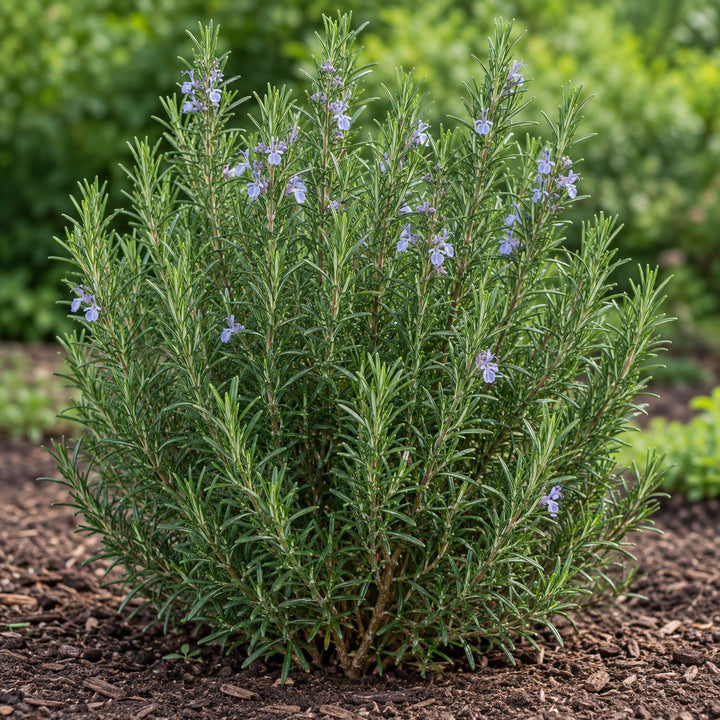
Rosemary is an evergreen, woody herb with gray-green, needle-like leaves that are white and fuzzy underneath. Brush it and you get an intense pine, eucalyptus and camphor aroma, the smell of a good roast or a fresh loaf of focaccia. On mature plants, small pale blue to white flowers appear in early summer.
Botanically it is now Salvia rosmarinus, though you will still see it sold as Rosmarinus officinalis.
Rosemary at a glance
| Trait | What to expect |
|---|---|
| Botanical name | Salvia rosmarinus |
| Foliage | Gray-green, needle-like, evergreen |
| Flowers | Small, pale blue to white, on mature plants |
| Size | 24 to 72 inches tall, 24 to 48 inches wide in mild climates; pot plants stay smaller |
| Bloom | Early to late June |
| Hardiness | USDA zones 8a to 10b; not winter hardy in zones 5 and 6 |
| Water | Low |
| Fragrance | Strong pine, eucalyptus and camphor |
Natural partners
Rosemary and lavender come from the same kind of place: sunny, rocky, dry Mediterranean hillsides. They want the same treatment, which means full sun, lean soil that drains fast and a light hand with the hose. Their gray-green foliage looks right together too, and the two scents, one sharp and piney, one sweet and floral, make a sunny herb corner smell wonderful on a warm afternoon.
The easiest way to pair them in Michigan is with containers. Set a pot of rosemary at the end of a lavender row or on a sunny patio among potted lavender, and it can move inside when the weather turns. Sketch the herb garden in the Companion Plant Planner.
Summer care
- Sun: full sun, as much as you can give it.
- Soil: fast-draining. In pots, use a gritty mix and a container with a drainage hole.
- Water: low. Water deeply, then let the top of the soil dry. Wet, humid, stagnant conditions bring root rot and powdery mildew.
- Airflow: do not crowd it. Good air movement keeps mildew away.
- Harvest: snip sprigs as needed; regular light cutting keeps the plant bushy.
Bringing it indoors for winter
Rosemary does not survive winter outdoors in zones 5 and 6. Before your first hard frost, move the pot to the brightest, coolest window you have. Water sparingly but do not let the pot dry out completely, and give it good airflow. Plants overwintered indoors may not flower, which is normal. The Frost Date Estimator helps you time the move.
In the kitchen
Rosemary is an excellent culinary herb, fresh or dried. Use it with roasted meats and vegetables, in stews, breads and herb vinegars, or steeped for tea. Strip the needles from the woody stem and chop them fine; a little goes a long way. Dry extra sprigs by hanging small bundles in a shaded, airy spot, the same way you would dry lavender.
Choosing a size
It is offered as 3-inch plugs, 4-inch pots and 1-gallon pots. A gallon plant gives you a harvest right away; plugs suit gardeners who like to start small. If it is out of stock, use Notify Me on the product page or set up availability alerts.
Frequently asked questions
Can I leave rosemary in the ground over winter?
Not in Michigan. It is hardy only to zone 8. Pot it up and bring it in, or replant each spring.
Do deer eat rosemary?
Deer tend to leave it alone, just as they do lavender.
















Share how it went in your field