

Use & Care NotesCompanion Plants
School Mouse Hosta: A Ruffled Miniature for Shady Troughs
 Save
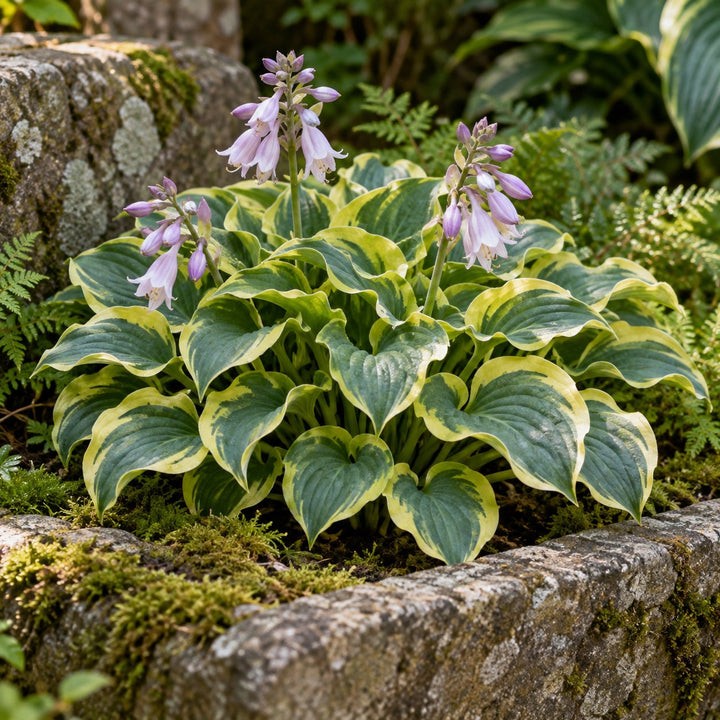
School Mouse hosta is a miniature, about 8 inches tall and a foot wide, with thick, coarsely wavy leaves in blue-green to green. Each leaf carries a crisp creamy yellow edge that holds its color all season, and the leaves twist and overlap into a tidy little ruffled rosette.
Let us be honest up front: this is not a plant for your lavender bed. Hostas want shade and steady moisture, which is the opposite of lavender's hot, dry ground. School Mouse belongs on the shady side of the same garden.
School Mouse at a glance
| Trait | What to expect |
|---|---|
| Botanical name | Hosta 'School Mouse' |
| Foliage | Blue-green to green with creamy yellow margins, thick and wavy |
| Flowers | Lavender bells on scapes about 14 inches tall |
| Size | About 8 inches tall, 12 inches wide |
| Bloom | Mid-June into early July |
| Hardiness | USDA zones 3 to 9 |
| Light | Part sun to full shade |
| Wildlife | Hummingbirds visit the flowers; deer find it tasty |
How it fits a lavender garden plan
Most properties have both a sunny bed and a shady corner. Put the lavender where it bakes and give School Mouse the cool spot under a tree or along the north side of the house. Its lavender-colored bells in early summer echo the color of the lavender across the yard, so the two areas still feel connected. Ferns, astilbe and other woodland plants make good neighbors in the shade bed.
It is part of a series of miniature hostas with rounded, mouse-ear leaves, and at this size it is perfect for fairy gardens, troughs and small pots near a shaded patio door. The Companion Plant Planner can help you map the sun and shade zones.
Growing a miniature well
- Soil: rich and evenly moist but well drained. Miniatures are fussier about drainage than big hostas.
- Containers: small pots and troughs dry out quickly in hot weather, so check them often in summer.
- After bloom: trim off spent scapes to keep the clump neat.
- Slugs: the thick leaves resist slugs better than many hostas. Good air movement helps in long wet spells.
- Winter in the ground: fully hardy in Michigan, but small crowns can heave in freeze-thaw cycles. Mulch lightly after the ground freezes.
- Winter in pots: move troughs and containers to a sheltered, unheated spot so roots do not freeze, thaw and sit wet over and over.
If any leaves show mottled or streaked color that does not match the normal pattern, check the plant in the Plant Health Checker; hosta virus is a reason to discard a plant.
Format
School Mouse is offered as a full 72-cell plug tray, which suits growers, container makers and anyone planting a large shade border. See the product page for current availability.
Frequently asked questions
Can I plant School Mouse next to my lavender?
No. Lavender needs full sun and dry soil, while this hosta needs shade and steady moisture. Plant them in different parts of the garden.
Is it safe around pets?
Hosta foliage is listed as toxic to dogs and cats, so place it where curious pets will not chew it.
Will deer eat it?
Probably. Hostas are a deer favorite, so a protected spot near the house is best.
Keep exploring
Ready to plant it?
Sizes, prices and shipping times are on its page.





Share how it went in your field