

Use & Care NotesLavender Plants
Sidonie Lavender: A Tall, Lacy-Leaved Lavender for Warm Climates
 Save
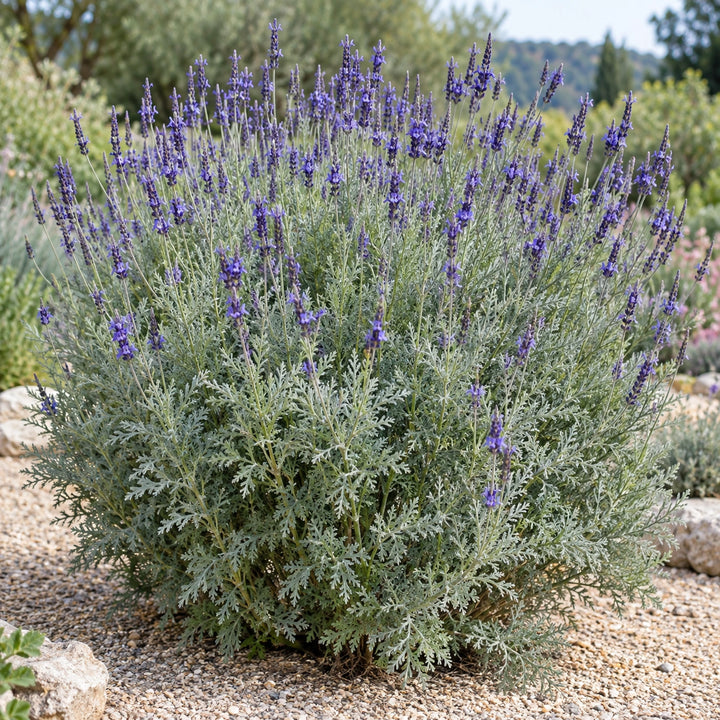
Sidonie lavender is Lavandula pinnata, a warm-climate lavender with finely divided, lacy foliage in silver and gray-green. It grows bushy, rounded and tall, listed at about 51 inches high and 59 inches wide where it is hardy, and it carries violet-blue spikes over a long season. Its scent is moderate, bold and resinous-herbal.
In a Michigan garden it will not get that big, because it will not stay out in winter. But a pot of it on a sunny deck is a conversation starter.
Sidonie at a glance
| Trait | What to expect |
|---|---|
| Botanical name | Lavandula pinnata 'Sidonie' |
| Flower color | Violet-blue |
| Foliage | Silver to gray-green, finely divided |
| Habit | Bushy, rounded and tall |
| Mature size | About 51 inches tall and 59 inches wide in frost-free climates |
| Bloom | Long season; starts mid-May, peaks late May, moderate rebloom |
| Hardiness | USDA zones 9a to 11b |
| Fragrance | Moderate; resinous and herbal |
A different kind of lavender
Most gardeners know lavender by its narrow, needle-like leaves. Lavandula pinnata looks different: its foliage is cut into fine, feathery lobes, so the plant has a soft, lacy texture even before it blooms. It comes from a subtropical climate and grows best with warmth, sun and excellent drainage. The Botanical Groups page compares it with English, Spanish and other lavender families.
Growing Sidonie in a container
In a pot, Sidonie stays far smaller than its in-ground size and can still fill out into a handsome, bushy plant over a summer.
- Pot: start in a 12- to 14-inch container and size up as it grows. Drainage holes are a must.
- Mix: a gritty, free-draining potting mix.
- Light: full sun, the hottest spot you have.
- Water: thoroughly, then let the top couple of inches dry. Low water needs.
- Deadhead: cut faded spikes back to the foliage to encourage more flowers.
- Trim: a light shaping in midsummer keeps it dense.
Overwintering
Sidonie is generally tender in freezing climates, so bring it inside before the first frost. A bright, cool room or sunroom works best; give it as much light as possible and water sparingly. Indoor plants may stretch a bit, so trim lightly in late winter and move it back outside once frost danger passes. The Frost Date Estimator helps you time both moves.
Uses
Sidonie is rated good for fresh and dried flowers and great for pollinators. A few violet-blue spikes and a sprig of the lacy foliage add an unusual texture to a small arrangement. Culinary use is not recommended.
Frequently asked questions
Will Sidonie grow five feet tall in a pot?
Not usually. Its listed size reflects frost-free gardens where it grows year after year. In a container that comes indoors for winter, expect a much smaller plant.
Why are the leaves so different from other lavenders?
Lavandula pinnata naturally has finely divided, feathery foliage. That is one of its main attractions.
Can it go in the ground in zone 9?
Yes. It is rated for zones 9a to 11b, where it can grow into a large shrub with sharp drainage and full sun.



Share how it went in your field