

Product Field NotesCompanion Plants
Silly String Hosta: Wavy Blue Ribbons for the Shade Garden
 Save
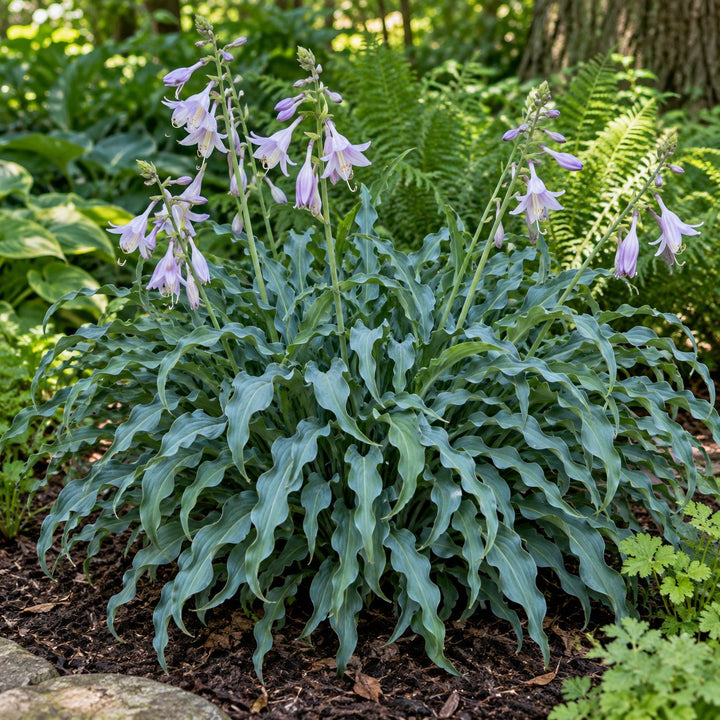
Silly String hosta has narrow, lance-shaped leaves in powdery blue with edges so rippled they look crimped. The leaves arch out from the crown into a loose mound about 14 inches tall and a little over two feet wide, and in early July pale purple trumpets rise above them.
It is a shade plant, so it does not go in the lavender bed. It earns its place on the cooler side of the property, where it adds movement and a bit of fun to the front of a shade border.
Silly String at a glance
| Trait | What to expect |
|---|---|
| Botanical name | Hosta 'Silly String' |
| Foliage | Narrow, wavy, powdery blue aging to blue-green |
| Flowers | Pale purple trumpets on 17 to 27 inch scapes |
| Size | About 14 inches tall, 28 inches wide |
| Bloom | Early to mid-July |
| Hardiness | USDA zones 3 to 9 |
| Light | Part sun to full shade |
| Wildlife | Good for pollinators; deer find it tasty |
Keeping the blue
The blue on a blue hosta is a waxy coating on the leaf surface. Heat and strong sun melt it away, which is why Silly String is bluest in spring and turns blue-green as summer goes on. To hold the blue longest, give it shade in the afternoon and avoid handling the leaves, since the coating rubs off. Overhead watering in full sun does it no favors either.
Planning it alongside lavender
Lavender and hostas need opposite conditions, but they can share a garden plan. Put lavender in the open, sunny bed and Silly String under trees or on the north side of the house. Its pale purple July flowers bloom about when lavender does, so both sides of the garden carry a touch of purple at once. In the shade bed, pair it with broad-leaved hostas, ferns or astilbe so its narrow, wavy leaves stand out. The Companion Plant Planner keeps sun and shade plants sorted.
Care through the year
- Soil: rich, humus-heavy, evenly moist and well drained.
- Water: deeply during dry spells, especially in the first summer.
- Summer: cut spent scapes after bloom.
- Pests: slugs chew holes in long wet spells; give the clump room for air to move.
- Health: discard any plant with mottled, streaked leaves, a sign of hosta virus. Watch for crown rot in hot, wet weather.
- Fall: cut foliage down after a hard frost to clear away slug eggs and debris.
- Spring: divide crowded clumps as the shoots emerge.
Choosing a tray
Silly String is offered as a 72-cell plug tray and a 20-cell plug tray. Choose the 72-cell tray for larger plantings or potting up many plants, or the 20-cell tray for fewer, bigger plugs. See each product page for current availability.
Frequently asked questions
Why is my Silly String turning green?
The waxy blue coating wears off with heat and sun as summer progresses. More afternoon shade keeps it bluer longer.
Does it work in containers?
Yes. Its arching, wavy leaves look good spilling over the edge of a shaded pot. Keep the soil evenly moist.
Is it safe for pets?
Hosta foliage is listed as toxic to dogs and cats, so plant it out of reach of pets that chew.















Share how it went in your field