

Product Field NotesCompanion Plants
Sombrero® Sangrita Coneflower: Orange to Brick Red on Dark Leaves
 Save
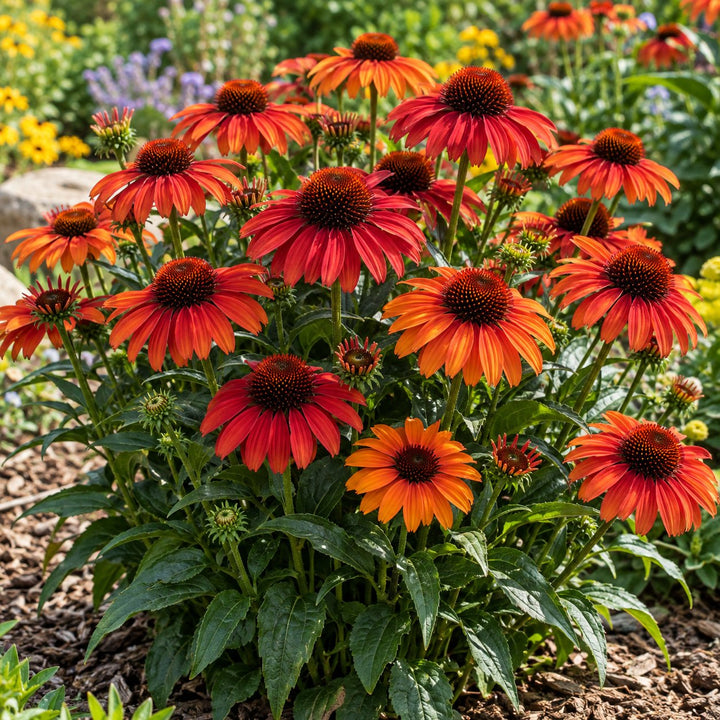
Sombrero® Sangrita coneflower changes as it blooms. New flowers open warm orange and mature to a deep brick red, so the plant shows a mix of tones all season. Dark brown cones and very dark green, glossy-rough leaves make the flower color look even richer.
It is a sturdy, well-branched plant, compact enough to sit in front of silvery, purple-flowered lavender in the same lean, sunny soil.
Sangrita at a glance
| Trait | What to expect |
|---|---|
| Botanical name | Echinacea Sombrero® Sangrita |
| Flowers | Orange maturing to brick red, about 3 inches, dark brown cone |
| Foliage | Very dark green, glossy-rough |
| Size | 18 to 22 inches tall, 22 to 24 inches wide |
| Bloom | Starts late June, peaks mid-July, through summer |
| Hardiness | USDA zones 4 to 9 |
| Light | Full sun to light part shade |
| Wildlife | Excellent for pollinators; deer resistant |
Dark foliage, deep color, silver neighbors
What sets Sangrita apart is its foliage. The very dark green leaves create a deep base that makes both the orange and the red flowers glow. Placed in front of lavender, that dark mound contrasts with lavender's silvery leaves, while the warm flowers play against the purple spikes. It is a richer, moodier take on the warm-color pairing than a pure orange or yellow coneflower.
Because the flowers shift color as they age, a planting of three or more looks layered, with orange and brick red mixed at once. Keep a small gap between coneflower and lavender crowns so air keeps moving. Plan the arrangement in the Companion Plant Planner.
Care through the seasons
- Late summer planting: plant by late summer so the roots establish before winter.
- Summer: deadhead spent flowers to keep new ones coming. Water only in dry spells once established.
- Heat: color is richest in moderate temperatures and may fade faster in extreme heat.
- Health: aster yellows, which causes distorted green flowers, is the main concern; remove affected plants. Crown and root rot occur in wet soil.
- Fall: leave the late flowers to set seed for the birds, and keep the base leaves intact.
- Winter: hardy in Michigan in well-drained soil. Avoid heavy mulch over the crown.
Containers and cut flowers
Its compact size suits a large container in full sun, where the dark leaves look striking against a pale pot. In the vase, cut a mix of orange and red blooms for a bouquet with built-in variety. The flowers dry well too, and carry a faint, lightly sweet scent.
Format
Sangrita is offered as a full 72-cell plug tray for mass plantings, borders and growers. See the product page for current availability.
Frequently asked questions
Why are my flowers two different colors?
That is Sangrita's character. Flowers open orange and mature to brick red, so both show at once.
How is it different from Salsa Red?
Salsa Red is a steady orange-red on a slightly taller plant. Sangrita shifts from orange to brick red and has notably darker leaves.
Will deer eat it?
Coneflowers are generally deer resistant, which makes them reliable in open gardens.

































Share how it went in your field