

Product Field NotesCompanion Plants
Sound of Music Hosta: A Giant Shade Anchor That Changes Color
 Save
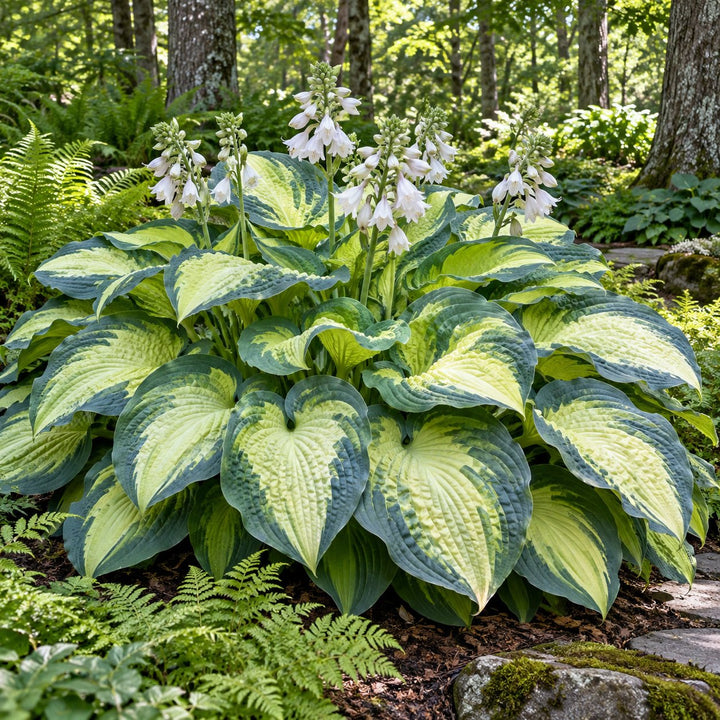
Sound of Music hosta is a true giant. Its very large, heart-shaped, heavily puckered leaves have chartreuse centers that streak out into wide, frosty blue-green margins, and by summer those centers mature to creamy white. The plant changes character through the season, and a mature clump reaches about 30 inches tall and five feet or more across.
It is a shade plant through and through, so it will never share soil with lavender. It is, however, a superb anchor for the shady side of a garden built around a sunny lavender bed.
Sound of Music at a glance
| Trait | What to expect |
|---|---|
| Botanical name | Hosta 'Sound of Music' |
| Foliage | Chartreuse to creamy white centers, wide blue-green margins, heavily puckered |
| Flowers | Large clusters of near-white trumpets |
| Size | 30 to 32 inches tall, 60 to 66 inches wide |
| Bloom | Mid to late June |
| Hardiness | USDA zones 3 to 9 |
| Light | Part sun to full shade |
| Wildlife | Hummingbirds and bees visit flowers; deer find it tasty |
Designing around a giant
A plant five feet wide is a commitment, and it rewards one. Use Sound of Music as the centerpiece of a large woodland bed, at the curve of a shaded path or under a mature tree where it can spread out. In a garden plan that includes lavender, it gives the shade side the same visual weight the lavender bed has in the sun. Its near-white flowers in June bring hummingbirds and bees to the shade garden while your lavender feeds pollinators out front.
Surround it with smaller, finer-textured plants such as ferns and astilbe, which make its bold, puckered leaves look even bigger. Map the space in the Companion Plant Planner before planting; it is easy to underestimate a giant hosta as a small plug.
Care notes
- Light: the creamy centers can scorch in hot afternoon sun. Part to full shade keeps the leaves clean.
- Soil and water: rich, humus-heavy and evenly moist but well drained. Water deeply in dry spells, especially in its first summer.
- Slugs: the thick leaves resist slug damage better than most hostas.
- Health: discard any plant showing mottled, streaked leaves unlike its normal pattern, a sign of hosta virus. Petiole or crown rot can show up in hot, wet weather.
- After bloom: cut spent scapes.
- Fall: cut the big leaves down after a hard frost, and avoid piling heavy, wet mulch over the crown.
- Spring: divide crowded clumps as shoots emerge.
Choosing a tray size
Sound of Music is offered as a 72-cell plug tray and as a deep 20-cell plug tray. The 72-cell tray suits growers bulking up stock, while the 20-cell tray gives fewer, larger plugs that size up faster. See each product page for current availability, or start larger orders at the Wholesale Hub.
Frequently asked questions
How long until it reaches full size?
Giant hostas take several seasons to mature. Each year the clump grows wider and the leaves larger and more puckered.
Why do the leaf centers change color?
The chartreuse centers naturally mature to creamy white by summer. It is part of the plant's appeal.
Is it safe for pets?
Hosta foliage is listed as toxic to dogs and cats, so keep it away from pets that chew.

































Share how it went in your field