

Product Field NotesCompanion Plants
Spot On Lungwort: Orange Buds, Salmon Bells and Blue in One Cluster
 Save
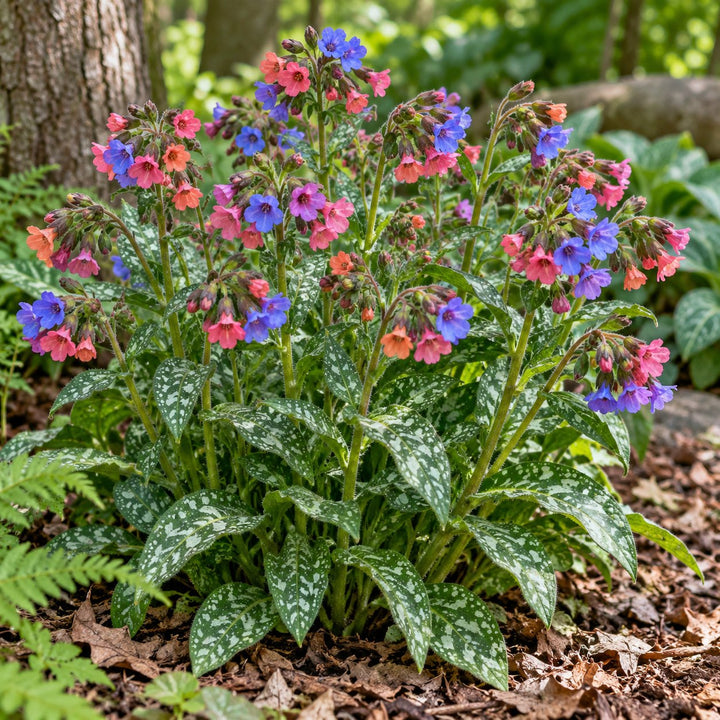
Spot On lungwort is one of the first welcome signs that winter is over. Its nearly orange buds open into deep salmon-pink, funnel-shaped flowers that slowly turn a rich blue, so each nodding cluster carries three colors at once. Below them, long green leaves dusted with fine silver speckles stay attractive all season.
Lungwort needs shade and soil that stays moist, which is the opposite of what lavender wants. Plant it on the shady side of the garden, where it brightens spring long before the lavender bed wakes up.
Spot On at a glance
| Trait | What to expect |
|---|---|
| Botanical name | Pulmonaria 'Spot On' |
| Flowers | Near-orange buds, deep salmon pink flowers aging to rich blue |
| Foliage | Green with fine silver speckles, 6 to 10 inch leaves |
| Size | 14 to 16 inches tall, 18 to 20 inches wide |
| Bloom | Late April into mid-May |
| Hardiness | USDA zones 3 to 9 |
| Light | Part to full shade |
| Wildlife | Good for early pollinators; deer and rabbit resistant |
The spring opener for the shade garden
A garden built around lavender peaks in summer. Spot On gives the shady parts of the same property a reason to look good in April and May, when early bees are searching for flowers. After bloom, the silver-speckled leaves act as a foliage accent for later shade plants such as hostas and ferns, and they tie in with lavender's silver even from across the yard.
It spreads slowly by creeping roots into a low patch, which makes it useful as a groundcover or edging along a woodland path. Deer and rabbits rarely bother it. Keep track of what goes in sun and what goes in shade with the Companion Plant Planner.
Care notes
- Shade: leaves scorch and wilt in hot afternoon sun or dry soil, so keep it shaded from midday on.
- Moisture: humus-rich soil that stays evenly moist. Water during summer dry spells.
- Mildew: powdery mildew is the main disease of lungworts, especially when plants are dry at the roots. Spot On was selected for good mildew resistance.
- After bloom: cut off the old flower stems so fresh leaves fill in.
- Early spring: cut away tattered old leaves before the flowers emerge.
- Dividing: split crowded clumps in early fall if needed.
Slugs can chew the leaves in wet spells, and sites that stay waterlogged in winter should be avoided.
Format
Spot On is offered as a full 72-cell plug tray, a good fit for groundcover plantings, long shade edgings and growers. See the product page for current availability.
Frequently asked questions
Why does the flower color change?
Lungwort flowers shift color as they age. Spot On goes from near-orange bud to salmon pink to blue, so all three show together.
Can it grow near my lavender?
Not in the same bed. Lavender needs hot sun and dry soil, while lungwort needs shade and moisture.
Does it stay green after flowering?
Yes. The silver-speckled leaves stay attractive through the season and often persist into early winter.

































Share how it went in your field