

Use & Care NotesCompanion Plants
Starry Starry Night Hibiscus: Near-Black Leaves, Speckled Pink Blooms
 Save
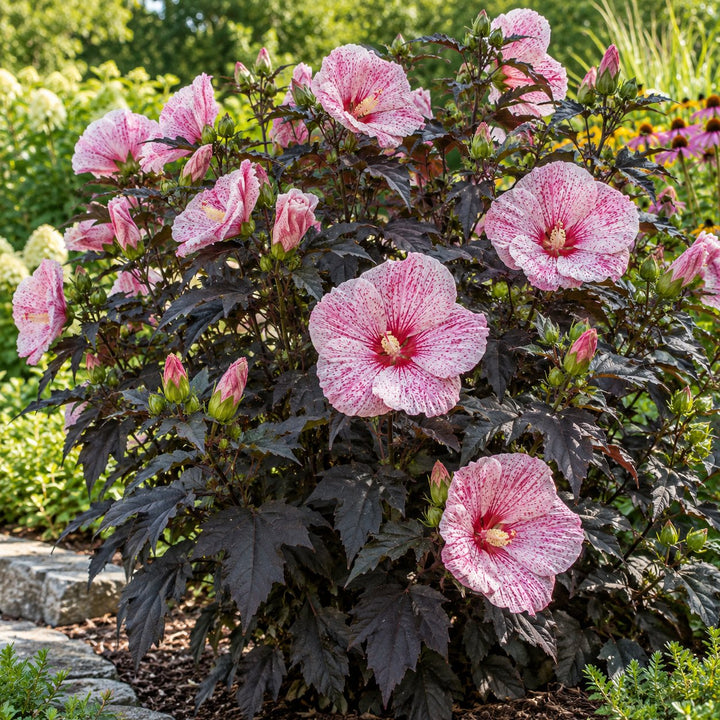
Starry Starry Night hardy hibiscus starts with its foliage: broad, maple-like leaves so dark they look nearly black, covering an upright clump about four feet tall and wide. From midsummer into early fall, flat 7 to 8 inch flowers in pale pink, finely speckled and veined in darker pink, sit on bright green calyces that stand out against the leaves. Unlike some hibiscus, it opens flowers from the top to the bottom of the stems, not only at the tips.
It wants full sun, like lavender, but its thirst for steady moisture means it belongs in a different bed.
Starry Starry Night at a glance
| Trait | What to expect |
|---|---|
| Botanical name | Hibiscus 'Starry Starry Night' |
| Flowers | Pale pink with darker pink speckles and veins, 7 to 8 inches |
| Foliage | Near-black, maple-like |
| Size | 3½ to 4 feet tall and wide |
| Bloom | Starts mid-July, peaks mid-August, into early fall |
| Hardiness | USDA zones 4 to 9 |
| Light | Full sun for darkest leaves; tolerates part shade |
| Wildlife | Great for pollinators and hummingbirds; moderately deer resistant |
Planning a sunny garden with wet and dry zones
Lavender and hardy hibiscus share a love of sun and almost nothing else. Lavender needs dry, sharply drained soil; hibiscus comes from wetland-loving parents and wilts if its soil dries out. In a property plan, that makes them partners across the yard rather than neighbors. Put lavender on high, dry ground and use Starry Starry Night where water collects: a low spot, a downspout area, a pond edge or a rain garden.
Its dark foliage is a dramatic backdrop in that moist bed, and its late-season flowers take over as lavender finishes, so the garden as a whole stays in bloom into fall. Full sun brings out the darkest leaf color. Sort wet and dry spots with the Companion Plant Planner.
Care through the year
- Water: consistent moisture. In hot spells, flowering slows and leaves may wilt if the soil dries out.
- Soil: grows in poor to fertile soil as long as it stays moist.
- Humidity: very tolerant; good airflow helps limit leaf spot.
- Pests: Japanese beetles, aphids and sawfly larvae are the more common problems.
- Spring: very late to emerge, often not until late May or June. Mark its spot and do not dig it up.
- Late fall or early spring: cut the woody stems back to a few inches.
Plug tray or bare root
Starry Starry Night is offered as a 72-cell plug tray for growers and larger plantings, and as a bare root plant for a single specimen. See each product page for current availability.
Frequently asked questions
Can it grow next to lavender?
Not happily. The steady moisture it needs would rot lavender. Plant them in separate beds.
Why are my leaves more purple than black?
Leaf color is darkest in full sun. In more shade the foliage stays a dark grayish purple.
Are the flowers good for cutting?
No. Each bloom is short-lived, so enjoy them on the plant, where new ones keep opening.
















Share how it went in your field