

Use & Care NotesLavender Plants
Super Nova Lavender: Late-Summer Lavandin When English Types Fade
 Save
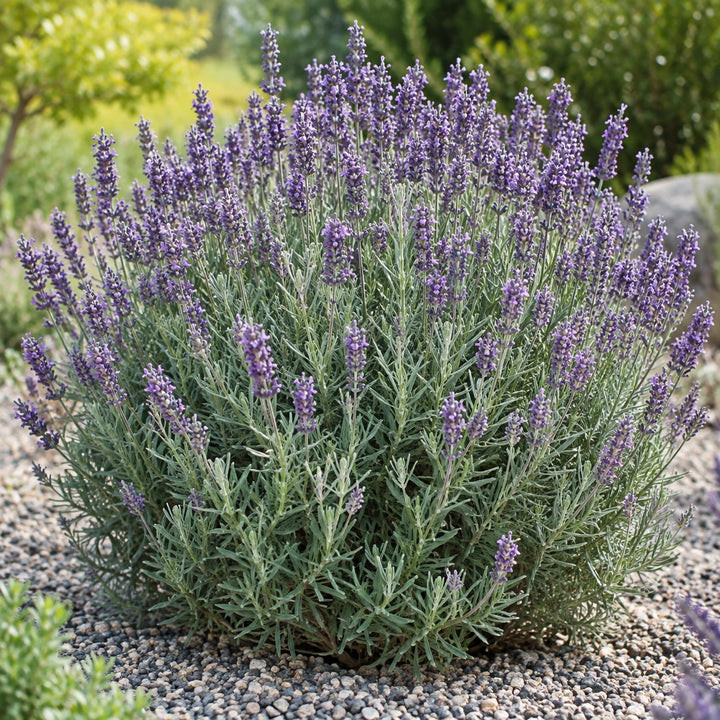
Super Nova lavender picks up the baton just as the English lavenders hand it off. This lavandin starts blooming in mid-July and peaks in mid-August, filling a three-foot mound of silver-green to gray-green leaves with tall purple spikes when much of the lavender garden is done for the year.
As a Lavandula × intermedia, it is a hybrid of English and spike lavender. Its scent is on the gentle side for a lavandin: sweet and floral, closer to true lavender, with a moderate, fresh camphor note.
Super Nova at a glance
| Trait | What to expect |
|---|---|
| Botanical name | Lavandula × intermedia 'Super Nova' |
| Flower color | Purple |
| Foliage | Silver-green to gray-green |
| Size | About 36 inches tall and 36 inches wide |
| Bloom | Starts mid-July, peaks mid-August, single main flush |
| Hardiness | USDA zones 5a to 8b |
| Fragrance | Strong, sweet lavandin with moderate camphor |
| Best uses | Essential oil, fragrance, fresh bouquets, dried flowers, U-pick |
Planning a longer lavender season
The easiest way to stretch lavender color is to mix bloom times. English lavenders such as early June bloomers open first; lavandins like Super Nova follow in July and August. Plant them in the same sunny bed, with the larger lavandins toward the back, and you get two waves instead of one. The Lavender Bloom Calendar shows how cultivars line up.
Late bloom is also handy for pollinators. Super Nova carries an excellent pollinator rating, and its flowers arrive when bees are still busy and many spring perennials are spent. Deer tend to avoid it.
Planting and spacing
Give it full sun and soil that drains fast. Lavandins grow big and vigorous, so space plants about three feet apart in a bed, a little more if you want to walk around each one. On clay, plant on a raised mound or berm with plenty of grit mixed in.
Set the crown at soil level and water deeply. During the first season, water whenever the top few inches are dry. Once established, its water needs are low.
Care and pruning
- Feeding: lean soil is best. Rich soil makes lavandin stems flop.
- Pruning: after the August harvest, shear the mound into a rounded dome, leaving green growth above the woody base. With low rebloom, one main cut is the routine.
- Timing: because it blooms late, do not leave pruning until autumn. Trim soon after harvest so new growth can firm up before cold weather.
- Winter: like other lavandins it needs a winter chill to bloom. Keep the crown dry and free of heavy mulch.
Cutting for bundles, bouquets and oil
Super Nova earns excellent ratings for cut flowers, dried flowers, oil and commercial fields, and it is rated for large bundles. For dried bundles, cut when the buds are colored and only a few flowers are open; for fresh bouquets, any time the spikes look full. Oil growers usually cut later, when more flowers are open. Lavandin is stronger and more camphor-forward in the kitchen than English lavender, so most cooks reach for an English type; if you experiment, use only food-grown buds and very little.
Plan the cutting window with the Harvest Calendar.
Choosing a plant size
Super Nova is offered as 3-inch plugs, 4-inch pots and 1-gallon pots. See the product page for current sizes and availability, and use Notify Me there if the size you want is not ready.
Frequently asked questions
When does Super Nova bloom?
It starts in mid-July and peaks around mid-August, later than most English lavenders.
Does it smell like English lavender?
It is softer and more true-lavender-like than many lavandins, with a moderate camphor freshness, but it is still a lavandin and a little brighter than English lavender.
Is it hardy in Michigan?
Super Nova is rated for USDA zones 5a to 8b. Fast drainage is what gets it through cold, wet winters.
















Share how it went in your field