

Product Field NotesLavender Plants
Thomas Lavender: A Strong-Scented Lavandin for Sachets and Rows
 Save
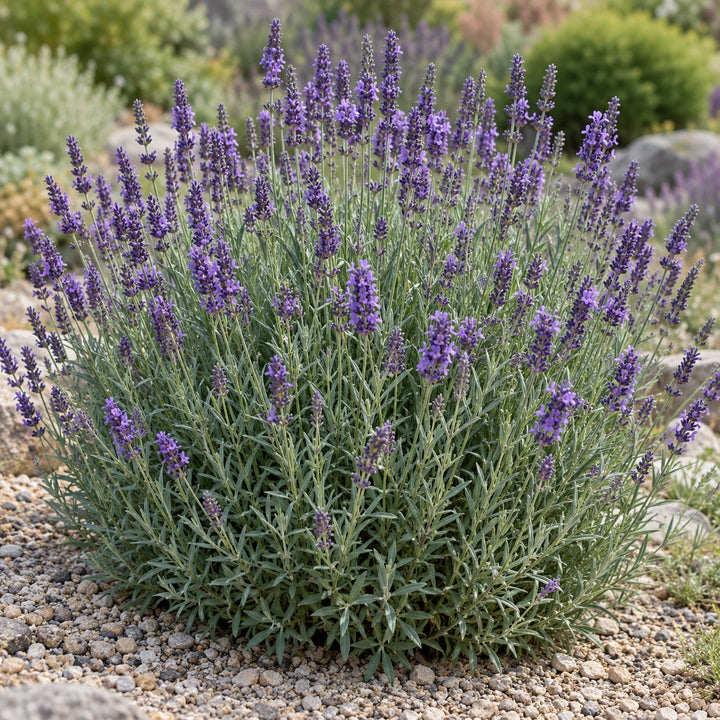
Thomas lavender is the lavandin to plant if you want people to notice the scent before they notice the plant. Its fragrance is strong and floral-herbal: sweet lavender layered with a fresh, clean camphor note. Add a three-foot mound of gray-green foliage and tall purple spikes in late summer, and you have a hard-working lavender for both garden and craft table.
It is Lavandula × intermedia 'Thomas', a hybrid of English and spike lavender, and it scores excellent marks for oil, cut flowers, dried flowers and commercial fields.
Thomas lavender at a glance
| Trait | What to expect |
|---|---|
| Botanical name | Lavandula × intermedia 'Thomas' |
| Flower color | Purple |
| Foliage | Gray-green |
| Size | About 36 inches tall and 36 inches wide |
| Bloom | Starts mid-July, peaks mid-August, single main flush |
| Hardiness | USDA zones 5a to 8b |
| Fragrance | Strong, sweet lavender with fresh camphor notes |
| Best uses | Essential oil, fragrance, fresh bouquets, dried flowers, U-pick |
A lavender for the craft table
Strongly scented lavandin buds are the classic filling for sachets, drawer bags and dryer sachets, because the camphor brightness holds up well over time. Thomas fits that job. Dry a few bundles, rub the buds off the stems and you have enough for a season of small linen bags. Its dried-flower rating is excellent, and long purple spikes also look good wrapped in twine as whole bundles.
For growers, its excellent oil and high oil production ratings, plus a large-bundle U-pick rating, make it a practical row lavender.
Planting and spacing
Full sun and quick drainage come first. Space plants about three feet apart so the mounds can fill out without crowding; in rows, leave a comfortable walking path between them. On heavy soil, plant on a raised row or berm with grit worked in. Set the crown at soil level, water deeply and keep mulch away from the base.
Check your zone with the USDA Zone Finder; Thomas is rated for zones 5a to 8b.
Care through the year
- Spring: wait for new growth, then tidy any winter-browned tips.
- Early summer: leave it be. Low water needs mean established plants rarely need the hose.
- Late summer: bloom starts in mid-July and peaks around mid-August. Harvest, then shear the plant into a rounded dome, staying above the woody base.
- Fall and winter: lavandin needs winter chill to bloom well. Good drainage is the best winter protection.
Harvesting
For dried bundles and sachet buds, cut on a dry morning when the buds are fully colored and only a few flowers are open. Hang small bunches upside down in a dark, airy spot until the stems snap. Oil growers usually cut later, when more of each spike is in bloom. Lavandin's camphor-forward flavor is stronger than English lavender's, so it is usually not the first choice for baking; if you try it, use food-grown buds sparingly.
Plan your timing with the Harvest Calendar.
Choosing a plant size
Thomas is offered as 3-inch plugs, 4-inch pots and 1-gallon pots. See the product page for current sizes and availability, and use Notify Me there if a size is not ready.
Frequently asked questions
Is Thomas good for sachets?
Yes. Its strong floral-herbal scent and excellent dried-flower rating make it a good sachet lavender.
How is it different from English lavender?
Thomas is a larger, later-blooming lavandin with a brighter, more camphor-forward scent. English lavender is smaller, earlier and sweeter.
How far apart should I plant it?
About three feet apart in beds, since it matures to around three feet wide.

































Share how it went in your field