

Use & Care NotesCompanion Plants
Tiger Swirl Daylily: Huge Swirling Gold Blooms Behind Lavender
 Save
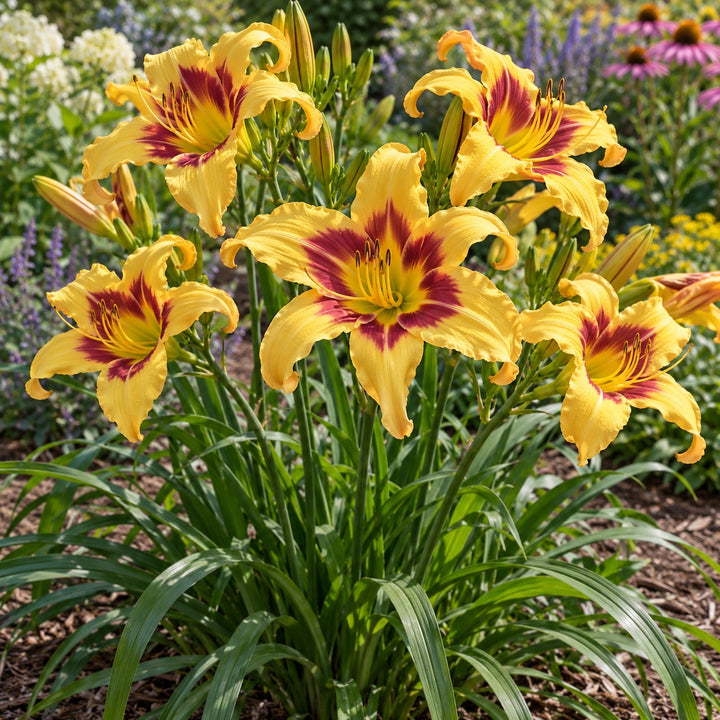
Tiger Swirl daylily stands out for its unusual form. Its huge triangular flowers, roughly 6 1/2 to 7 inches across, are light golden yellow with a pronounced raspberry red eye, and the smooth lower sepals often twist and curl for a swirling, almost windblown look.
The lightly fragrant flowers open in July on tall, 32-inch scapes above a fountain of arching green leaves.
Tiger Swirl at a glance
| Trait | What to expect |
|---|---|
| Botanical name | Hemerocallis 'Tiger Swirl' |
| Flowers | Light golden yellow with a raspberry red eye, about 6 1/2 to 7 inches |
| Fragrance | Light and sweet, noticeable up close |
| Size | Scapes about 32 inches; clump about 19 inches tall, 18 to 24 inches wide |
| Bloom | Starts early July, peaks mid-July, one main flush lasting several weeks |
| Hardiness | USDA zones 3 to 9 |
| Light | Full sun to light part shade |
| Deer | Susceptible |
A tall, lively backdrop
Most daylilies on our companion list are compact edgers. Tiger Swirl is the opposite: tall, bold and best at the back. Its 32-inch scapes lift huge gold flowers above English lavender, so the view reads in layers, purple spikes in front and swirling gold and raspberry behind.
Gold is the classic partner for purple, and the raspberry eye adds a warm note that ties in with deeper lavender cultivars. Its mid-July peak lands right in the heart of lavender season. Plant clumps a couple of feet behind the lavender row so the daylily foliage does not crowd the lavender's base. Arrange the rows in the Companion Plant Planner.
Planting and care
- Light: at least six hours of sun for the best bloom.
- Soil: average and well drained. Once established it handles heat, clay and dry spells.
- During bloom: each flower lasts a day. Snap off faded flowers for a tidy look.
- After bloom: cut bare scapes to the base. This is a single-flush daylily, so plan other plants for late-season color.
- Dividing: split crowded clumps every few years.
- Winter: a dormant type that dies back fully and is fully hardy in Michigan. Clean up foliage after a hard frost.
In wet seasons, watch for leaf streak and leaf spot, and avoid soggy soil to prevent crown rot.
Good company
Tiger Swirl is a natural companion to other spider-form and unusual-form daylilies, and it works in cottage gardens, mass plantings and on slopes. A drift of it at the back of a long lavender border is a showpiece.
Format
Tiger Swirl is offered as a dormant bare root plant. See the product page for current availability, or the Wholesale Hub for larger bare root orders.
Frequently asked questions
Does it rebloom?
No, it has one main flush in July that lasts several weeks.
Is it safe for cats?
No. All parts of daylilies are toxic to cats.
Why are the sepals twisted?
That is its signature trait. The smooth lower sepals often twist and curl, giving the flower its swirl.
Keep exploring
Ready to plant it?
Sizes, prices and shipping times are on its page.



Share how it went in your field