

Use & Care NotesCompanion Plants
Trendsetter Hosta: A Low, Wide Mound with Rippled Cream Edges
 Save
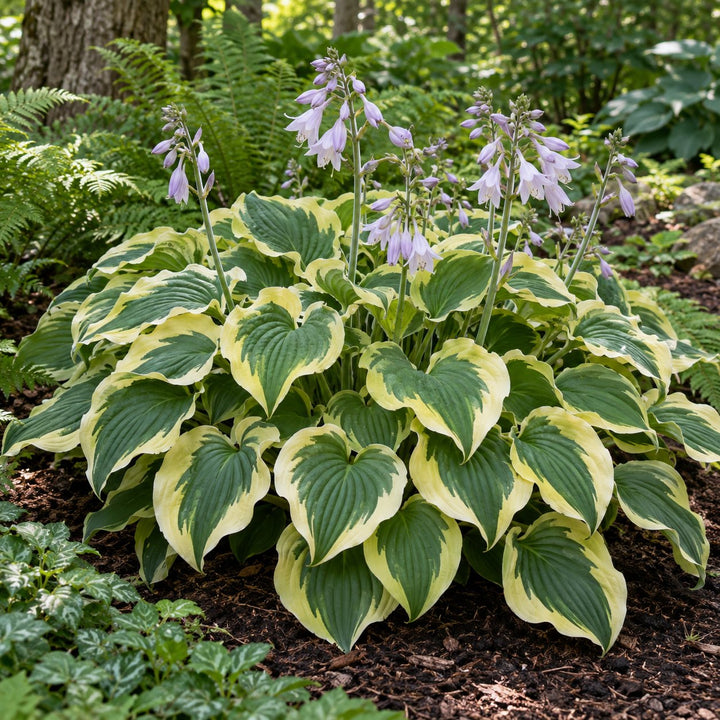
Trendsetter hosta grows wide rather than tall. Its green, heart-shaped leaves carry broad yellow margins that soften to creamy white by midsummer, and the edges ripple just enough to catch the eye. The mound stays about a foot tall but can reach more than 3 feet across.
It belongs in the shade, which means it belongs somewhere other than your lavender bed. Think of it as lavender's shady-side counterpart.
Trendsetter at a glance
| Trait | What to expect |
|---|---|
| Botanical name | Hosta 'Trendsetter' |
| Foliage | Green hearts with wide yellow margins turning creamy white, slightly rippled |
| Flowers | Pale lavender trumpets on 28- to 33-inch scapes |
| Size | About 12 inches tall and 40 inches wide |
| Bloom | Mid-June into early July |
| Hardiness | USDA zones 3 to 9 |
| Light | Part sun to part shade, full shade |
| Wildlife | Attracts hummingbirds; deer browse it |
The honest pairing
Lavender needs full sun and dry, fast-draining soil. Trendsetter needs shade and steady moisture. Those two wish lists do not overlap, so the pairing happens across the garden, not within one bed. A common setup: lavender along a sunny driveway or front walk, and Trendsetter edging the shady bed under a tree or along the north side of the house, with ferns and astilbe behind it.
What ties them together is color. Trendsetter's pale lavender flowers rise high above the leaves in late June, right around when English lavender starts to color up across the yard. Lay out both zones in the Companion Plant Planner.
Using its low, wide shape
A hosta this flat and broad is a natural edger. Plant a row along the front of a shady border and the cream margins draw a crisp line that reads well even at dusk. A single plant also makes a good specimen in a wide, shallow container, where the rippled edges spill over the rim.
Spacing matters with a plant that reaches over 3 feet wide. Set plants farther apart than the small plugs suggest; they fill in.
Care notes
- Soil and water: rich, humus-heavy soil; water deeply in dry spells, especially the first summer.
- Heat: afternoon sun during hot spells can scorch the leaves, so keep it shaded and watered.
- Slugs: they chew holes in the leaves in wet weather. Clean up debris and give the clump airflow.
- After bloom: cut the spent scapes.
- Fall: cut foliage down after a hard frost.
- Spring: divide crowded clumps as the shoots emerge.
Formats offered
Trendsetter comes as a full 72-cell plug tray and as a deep 20-cell plug tray. The 72-cell tray suits growers and large plantings; the 20-cell tray gives you fewer, larger plugs. See each product page for current availability.
Frequently asked questions
How fast does the yellow edge turn cream?
The margins start out yellow in spring and soften to creamy white over the summer, usually by midsummer.
Can it take any sun?
A little gentle morning sun is fine. Hot afternoon sun is what scorches it.
Is it pet safe?
Hosta foliage is listed as toxic to dogs and cats, so keep it away from pets that chew plants.
















Share how it went in your field