

Use & Care NotesCompanion Plants
Undulata Albomarginata Hosta: The Dependable White-Edged Classic
 Save
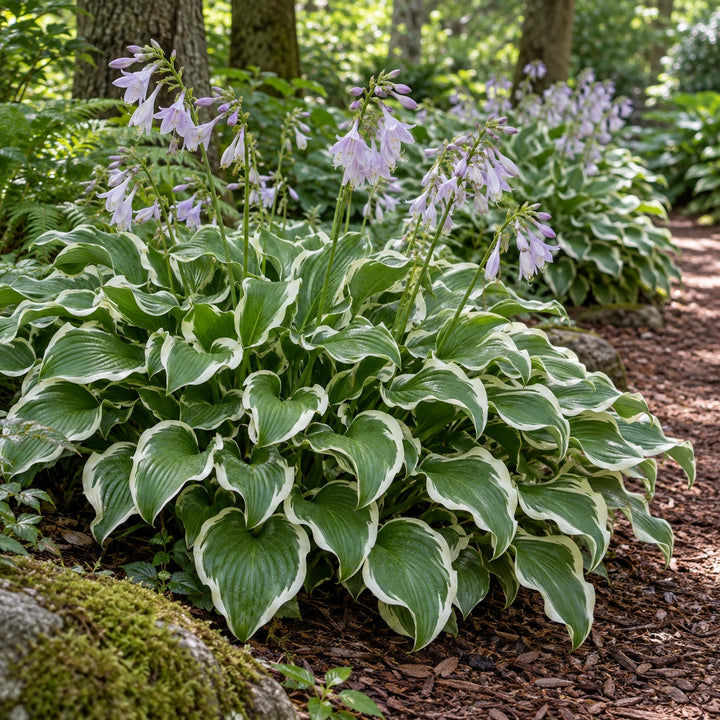
Undulata Albomarginata hosta has been grown in gardens for a long time, and for good reason. Its medium green, slightly twisted leaves are edged in wavy white with gray-green streaks where the two colors meet. It spreads readily into a mound about 18 inches tall and 40 inches wide, and it is one of the first hostas up in spring.
You may also see it under the older name 'Thomas Hogg'. Either way, it is a workhorse for shade, which is exactly where your lavender is not.
At a glance
| Trait | What to expect |
|---|---|
| Botanical name | Hosta undulata var. albomarginata |
| Foliage | Medium green with wavy, irregular white margins |
| Flowers | Pale lavender trumpets on tall 31- to 45-inch scapes |
| Size | About 18 inches tall and 40 inches wide |
| Bloom | Early to mid-July |
| Hardiness | USDA zones 3 to 9 |
| Light | Part sun to part shade, full shade |
| Habit | Spreading mound, good for mass planting |
Lavender spikes, but in the shade
Here is the fun part of this pairing. In July, Undulata Albomarginata sends up tall scapes of pale lavender trumpets, sometimes nearly 4 feet high, right around the time your real lavender is in full color out in the sun. A long run of these hostas makes a continuous band of white-edged leaves with lavender-colored flowers floating above, a shady echo of the sunny border.
Keep the two apart, though. Hostas want shade and steady moisture; lavender wants hot sun and dry roots. Plant this one under trees or along the north side of the house with ferns and astilbe, and use the Companion Plant Planner to sort out which parts of your yard are which.
Planting the bare root
Set the bare root crown with the growing points just at or slightly below the soil surface, spread the roots out, fill in with rich, humus-heavy soil and water well. Because it spreads readily, space plants generously along a bed edge; they will close the gaps.
Care notes
- Spring: it emerges early, so a late frost can nip new shoots. Toss a sheet over them on a frosty night. Divide crowded clumps as shoots appear.
- Summer: the thinner leaves and white margins scorch in hot, dry weather. Keep it shaded and water deeply in dry spells.
- Slugs: the main pest on these thinner leaves. Clean up debris and give clumps airflow.
- Fall: cut foliage down after a hard frost to clear out slug eggs.
Watch for mottled, streaked leaves, a sign of Hosta Virus X, and discard any affected plant. Soggy soil can also lead to crown rot.
Frequently asked questions
Is this the same as Thomas Hogg?
'Thomas Hogg' is listed as a synonym, so you may see it under either name.
How fast does it spread?
It spreads readily, which is why it is a favorite for edging and mass plantings in shade.
Is it safe around dogs and cats?
Hosta foliage is listed as toxic to dogs and cats, so plant it where pets will not chew it.
















Share how it went in your field