

Product Field NotesCompanion Plants
Violets Are Blue Delphinium: Midsize Spires Behind the Lavender
 Save
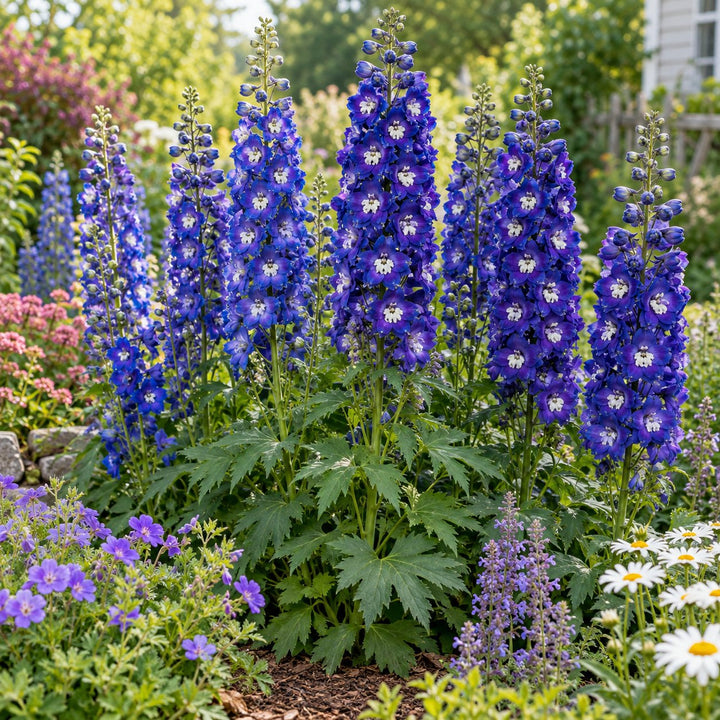
Violets Are Blue delphinium blends deep violet, purple and blue in every floret, each one marked with a crisp white center. The flowers pack tightly onto stout stems 2.5 to 3 feet tall, tall enough to add height to the middle of a border without towering over everything around it.
Plants are very uniform, and the strong stems carry the heavy spikes well. It is the kind of plant that makes a cottage garden look like a cottage garden.
Violets Are Blue at a glance
| Trait | What to expect |
|---|---|
| Botanical name | Delphinium elatum 'Violets Are Blue' |
| Flowers | Blend of deep violet, purple and blue with a white center |
| Foliage | Large, deeply lobed, medium green |
| Size | 2.5 to 3 feet tall, 18 to 24 inches wide |
| Bloom | Mid to late June, smaller rebloom in late summer and fall |
| Hardiness | USDA zones 3 to 7 |
| Light | Full sun to light part shade |
| Wildlife | Great for pollinators and hummingbirds; deer resistant |
Blue spires and purple spikes
Delphinium and lavender bloom together in late June, and the combination is pure early summer: tall blue-violet spires above, rounded purple-and-silver mounds below. The trick is giving each its own soil. Delphinium wants rich, evenly moist ground and regular water; lavender wants lean, dry ground. Plant the delphinium in a border directly behind the lavender bed, with a path or edging between them, so you can feed and water one without drowning the other.
From the front, the layers look like a single planting. Map the two beds in the Companion Plant Planner.
Keeping delphinium happy in the Great Lakes
Delphiniums love cold winters and cool summers, and they sulk in heat waves, when flowers fade quickly. A spot with afternoon shade helps in hotter sites. Other things to know:
- Staking: a good idea in windy spots, even with strong stems. Set stakes early.
- Water: regular and steady, at the base.
- Air flow: powdery mildew is likely in muggy, still weather; do not crowd it.
- Slugs: they love emerging shoots in spring. Watch closely as growth starts.
- Winter: crown rot in wet winter soil is the main cause of loss. Cut stems down in fall and keep heavy mulch off the crown.
The second bloom
After the June spikes finish, cut them back to the leafy base. The plant will send up a second, smaller round of flowers in late summer and fall. It will not match the first show, but blue flowers in September are never unwelcome.
For cutting and drying
Delphinium is rated excellent as a cut flower and good for drying. Cut spikes when the lower florets are open and the top buds are still closed. Dried delphinium and dried lavender make a lovely all-purple bundle. All parts of delphinium are poisonous if eaten, so keep it away from children and pets.
About the plug tray
It is offered as a full 72-cell plug tray, a good fit for cut flower growers and long cottage borders. See the product page for current availability.
Frequently asked questions
Will it grow in zone 8?
It is rated for zones 3 to 7 and prefers cool summers, so it is best suited to colder climates.
Does it need staking?
Its midsize, strong stems help, but staking is still wise in windy spots.

































Share how it went in your field