

Product Field NotesCompanion Plants
Waterslide Hosta: Rippling Blue Leaves Like Splashing Water
 Save
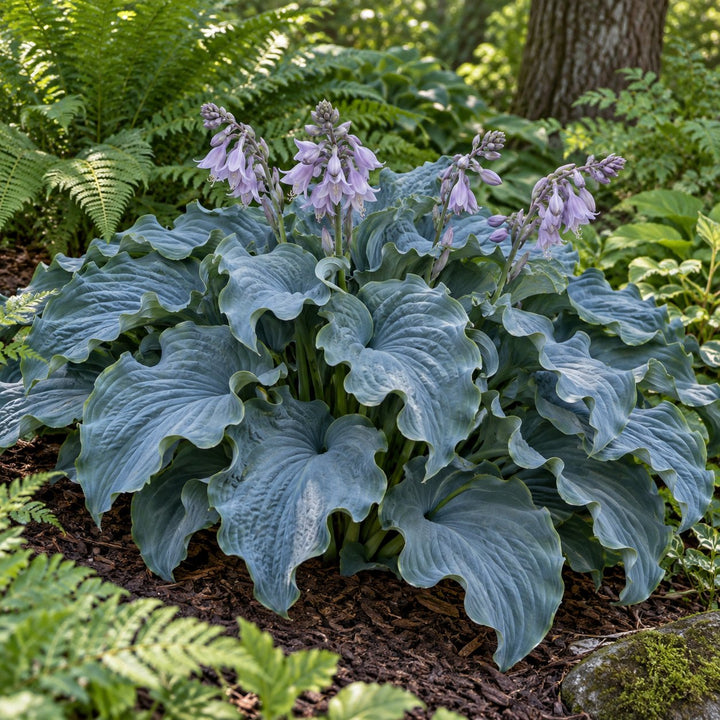
Waterslide hosta looks like a mound of moving water. Its thick, waxy, matte blue leaves are heavily rippled along their full length and arch outward in overlapping layers, forming a medium mound about 14 inches tall and 32 inches wide. In mid to late summer, neat scapes carry lavender trumpet flowers just above the foliage.
Blue hostas and lavender share a cool, silvery color palette. They just do not share a bed.
Waterslide at a glance
| Trait | What to expect |
|---|---|
| Botanical name | Hosta 'Waterslide' |
| Foliage | Blue, thick, waxy and heavily rippled |
| Flowers | Lavender trumpets on scapes about 17 inches tall |
| Size | About 14 inches tall and 32 inches wide |
| Bloom | Mid-July into early August |
| Hardiness | USDA zones 3 to 9 |
| Light | Part sun to part shade, full shade |
| Slugs | Thick leaves resist them better than most hostas |
Why the blue needs shade
The blue on a blue hosta is not pigment alone. It comes from a waxy coating on the leaf surface, and that coating melts away in heat and strong sun, leaving the leaf greener. Waterslide holds its blue well into summer before turning slightly greener, and the more afternoon shade you give it, the longer the blue lasts.
That is the exact opposite of lavender, which needs all the sun it can get. So the pairing is a garden-wide one: lavender's silver-gray and purple in the sunny beds, Waterslide's rippling blue under trees or along the north side of the house. Seen from the same patio, the two zones share a cool, calm color story. Its lavender-colored flowers in late July even echo the real thing. Place both with the Companion Plant Planner.
Design ideas
- Pair it with other ruffled hostas for a textured, wavy shade bed.
- Set it beside chartreuse coral bells for a bright blue-and-gold contrast.
- Use a line of them to edge a shaded path; the medium size fits the front of a border.
- Grow one in a container on a shaded porch, where the ripples are at eye level.
Care notes
Plant in rich, humus-heavy soil and water deeply during dry spells, especially the first summer. Cut spent scapes after bloom. After a hard frost, cut the foliage down to clear out slug eggs and debris. Divide crowded clumps in early spring as the shoots come up. Keep the crown in well-drained soil so it does not sit wet over winter, and watch for mottled, streaked leaves, a sign of Hosta Virus X; discard any affected plant.
Formats offered
Waterslide is offered as a full 72-cell plug tray and as a deep 20-cell plug tray. Choose the 72-cell tray for growers and mass plantings, or the 20-cell tray for fewer, larger plugs. See each product page for current availability.
Frequently asked questions
Why is my blue hosta turning green?
Heat and sun wear away the waxy coating that makes the leaves look blue. More afternoon shade keeps the blue longer.
Is it slug resistant?
Its thick leaves resist slug damage better than most hostas, though wet years can still bring some holes.
Is it safe around pets?
Hosta foliage is listed as toxic to dogs and cats.

































Share how it went in your field