

Product Field NotesCompanion Plants
Wide Brim Hosta: A Time-Tested Classic That Takes Some Sun
 Save
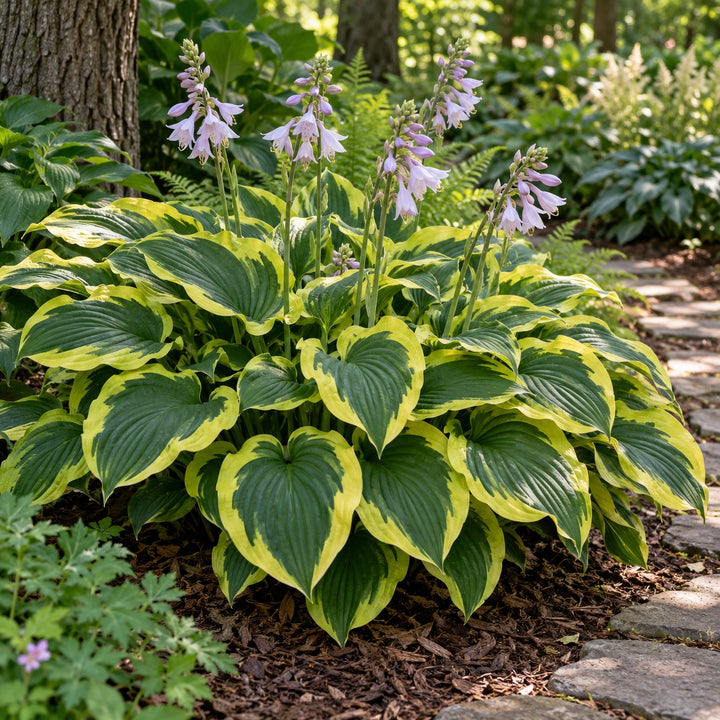
Wide Brim hosta has been a garden favorite since its introduction in 1979, and it holds the Royal Horticultural Society's Award of Garden Merit. Its rounded, heart-shaped, lightly puckered leaves are dark green with wide, irregular borders of buttery yellow that fade toward cream later in the season, forming a neat mound about 16 inches tall and 2 to 3½ feet wide.
What sets it apart is flexibility. It adapts to anything from full shade up to about three-quarters of a day of sun, as long as the soil stays moist.
Wide Brim at a glance
| Trait | What to expect |
|---|---|
| Botanical name | Hosta 'Wide Brim' |
| Foliage | Dark green with wide buttery yellow margins fading to cream |
| Flowers | Pale lavender trumpets on 24-inch scapes |
| Size | About 16 inches tall, 24 to 40 inches wide |
| Bloom | Mid-July into early August |
| Hardiness | USDA zones 3 to 9 |
| Light | Full shade to about three-quarters of a day of sun |
| Award | RHS Award of Garden Merit |
Some sun, but not lavender's bed
Because Wide Brim tolerates a good amount of sun, it is tempting to slip it into the lavender border. Resist. Sun tolerance is not the issue; soil is. Wide Brim still wants rich, moist soil full of organic matter, while lavender wants lean, dry ground. Water enough for the hosta and the lavender rots; keep it dry for the lavender and the hosta's margins scorch.
Its flexibility is still useful. Many yards have a transition zone, a bed that gets morning sun and afternoon shade, sitting between the open lavender garden and the deep shade under trees. That is a perfect home for Wide Brim, alongside daylilies, astilbe or ferns. Its pale lavender flowers in late July echo the lavender a few steps away. Map the zones in the Companion Plant Planner.
Planting the bare root
Set the crown with its growing points at or just below the soil surface in rich, compost-amended soil, spread the roots and water well. Space plants generously; a mature Wide Brim can reach well over 3 feet across.
Care notes
- Water: evenly moist soil, with deep watering in hot, dry weather. Sunnier sites need more.
- After bloom: cut the spent scapes.
- Slugs: they chew holes in wet weather; clean up debris and give clumps airflow.
- Fall: cut foliage down after a hard frost to remove slug eggs.
- Spring: divide crowded clumps as shoots emerge.
Watch for mottled, streaked leaves, a sign of Hosta Virus X, and discard any affected plant.
Frequently asked questions
How much sun can Wide Brim take?
Up to about three-quarters of a day, provided the soil stays moist. In hotter, sunnier spots the margins can scorch without enough water.
Do the yellow edges change color?
Yes. They start buttery yellow and fade toward cream later in the season.
Is it safe for pets?
Hosta foliage is listed as toxic to dogs and cats.

































Share how it went in your field