

Product Field NotesCompanion Plants
Wiggles and Squiggles Hosta: Wavy Yellow Ribbons for Edging
 Save
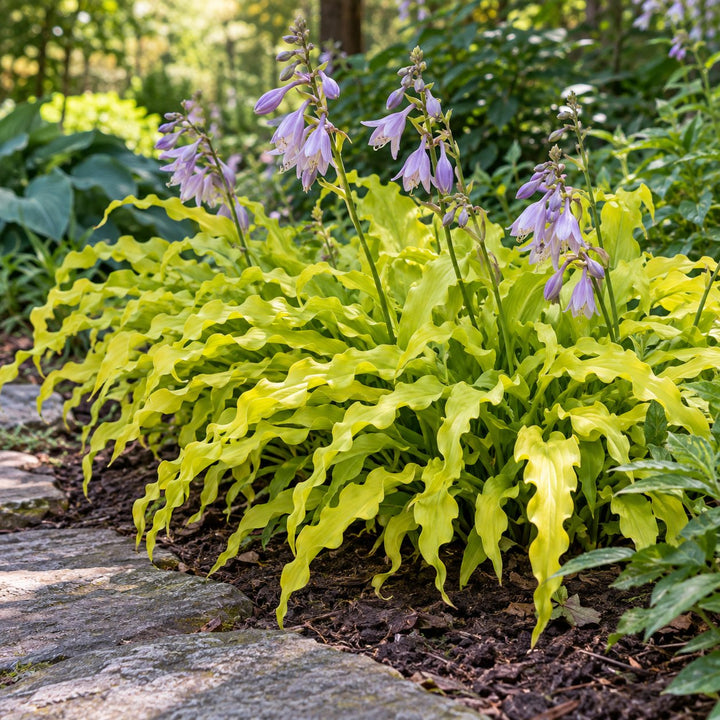
Wiggles and Squiggles hosta lives up to its name. Its very long, thin, strap-like leaves are bright yellow with intensely wavy edges from base to tip, and they spread low to the ground in a wide, flat clump about 8 to 10 inches tall and 2 feet wide. It looks less like a hosta and more like a tangle of yellow ribbons.
In midsummer, lavender flowers rise on 18- to 24-inch scapes above the ripples.
Wiggles and Squiggles at a glance
| Trait | What to expect |
|---|---|
| Botanical name | Hosta 'Wiggles and Squiggles' |
| Foliage | Long, thin, very wavy; bright yellow, chartreuse in deeper shade |
| Flowers | Lavender trumpets on 18- to 24-inch scapes |
| Size | 8 to 10 inches tall, about 24 inches wide |
| Bloom | Early to mid-July |
| Hardiness | USDA zones 3 to 9 |
| Light | Morning sun and afternoon shade for best color |
| Deer | Susceptible |
Finding its spot
This hosta has a narrow comfort zone for color. With morning sun and afternoon shade, the leaves stay bright yellow. In deeper shade they turn more chartreuse, which is still pretty, just calmer. Hot afternoon sun scorches the thin leaves.
None of those spots are lavender spots. Lavender needs sun all day and lean, dry soil; this hosta needs shade after noon and steady moisture. In a whole-garden plan, use it along the east side of a building or under high branches, as the bright edge of a shady bed with ferns and astilbe. Its July lavender flowers coincide with the lavender harvest across the yard, a nice bit of timing. Map it in the Companion Plant Planner.
Design ideas
- Path edging: a row along a shady walk reads like a wavy gold ribbon.
- Containers: the ribbons spill over the rim of a low, wide pot.
- Texture contrast: plant beside round, blue-leaved hostas; the strap leaves and the round leaves make each other look more dramatic.
- Mass planting: a drift of them brightens a dim corner.
Care notes
Keep the soil rich, evenly moist and well drained, and water deeply during dry spells, especially in the first summer. Remove spent scapes after bloom. Slugs are the main problem on these thinner leaves, so clean up debris and cut foliage down after a hard frost to remove slug eggs. Watch for Hosta Virus X (mottled, streaked leaves) and discard any affected plants, and avoid soggy soil, which leads to crown rot.
About the plug tray
It is offered as a full 72-cell plug tray, plenty for edging long shady paths or a big mass planting. See the product page for current availability.
Frequently asked questions
Why are my leaves green instead of yellow?
Deeper shade turns them chartreuse. A little morning sun brings back the bright yellow.
Is it safe around pets?
Hosta foliage is listed as toxic to dogs and cats.

































Share how it went in your field