

 Open in the Field Guide
We all need a Savior
“For all have sinned and fall short of the glory of God.”
Romans 3:23 (BSB)
None of us can earn our way to God by being good enough. We all need mercy.
 Field Guide · Birds
Falco sparverius

It can scratch or peck with its beak and talons if handled, so observe it without approaching or touching it.
The American kestrel is a small falcon found across most of North and South America. It lives in open or partly open places, including grasslands, farms, and the edges of towns and forests.
 How to recognize it
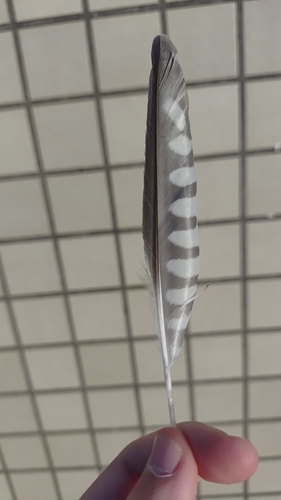
It has a rusty back and a pair of dark marks on each side of its face; males have blue-gray wings, while females have rusty, barred wings. It is smaller than the peregrine falcon and merlin, and is the American counterpart of the similar Eurasian kestrel.
 In lavender fields
It may hunt insects near lavender gardens, but it has no special connection to lavender.
 When to see it
American Kestrel is seen most often in Jan, Feb, Mar, Apr, May, Sep, Oct, Nov, Dec. There are 5308330 public records of it worldwide.
 Questions
It’s seen most often in Jan, Feb, Mar, Apr, May, Sep, Oct, Nov, Dec.
It has a rusty back and a pair of dark marks on each side of its face; males have blue-gray wings, while females have rusty, barred wings. It is smaller than the peregrine falcon and merlin, and is the American counterpart of the similar Eurasian kestrel.
It can scratch or peck with its beak and talons if handled, so observe it without approaching or touching it.















You may also like

Here to help while we’re tending the farm