

 Open in the Field Guide
We all need a Savior
“For all have sinned and fall short of the glory of God.”
Romans 3:23 (BSB)
None of us can earn our way to God by being good enough. We all need mercy.
 Field Guide · Plants and flowers
Platanus occidentalis

Its pollen can trigger allergy symptoms in some people.
American sycamore is a large deciduous tree native to eastern and central North America, including parts of southern Canada and northeastern Mexico. It commonly grows in moist places such as riverbanks and floodplains.
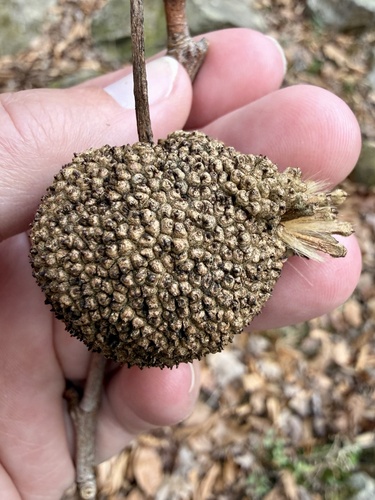
 How to recognize it
Its peeling bark forms mottled patches of pale cream and brown, especially on the upper trunk and branches, and its broad leaves have several pointed lobes. It usually has one round fruit ball per stalk, while the similar plane trees listed often have several.
 When to see it
American Sycamore is seen most often in Apr, May, Jun, Jul, Aug, Sep, Oct. There are 57735 public records of it worldwide.
 Questions
It’s seen most often in Apr, May, Jun, Jul, Aug, Sep, Oct.
Its peeling bark forms mottled patches of pale cream and brown, especially on the upper trunk and branches, and its broad leaves have several pointed lobes. It usually has one round fruit ball per stalk, while the similar plane trees listed often have several.
Its pollen can trigger allergy symptoms in some people.









You may also like

Here to help while we’re tending the farm