

 Open in the Field Guide
We all need a Savior
“For all have sinned and fall short of the glory of God.”
Romans 3:23 (BSB)
None of us can earn our way to God by being good enough. We all need mercy.
 Field Guide · Plants and flowers
Quercus ilicifolia

Eating large amounts of bear oak leaves or acorns can cause illness.
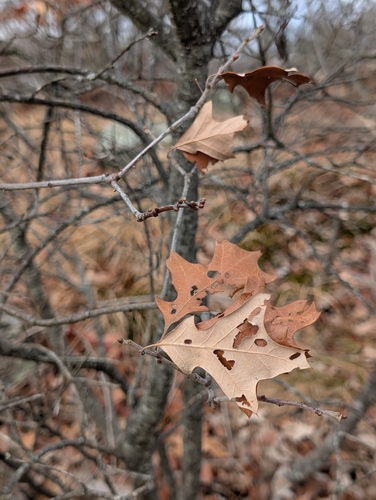
Bear oak is a small, often shrubby deciduous oak native to the eastern United States and parts of southeastern Canada. It commonly grows in dry, sandy or rocky barrens and open woodlands.
 How to recognize it
Its small leaves have holly-like, pointed lobes, unlike the larger, more rounded leaves of English oak and sessile oak; it is also deciduous and shrubby, unlike the evergreen holm oak, and lacks the thick corky bark of cork oak.
 When to see it
Bear Oak is seen most often in May, Jun, Jul, Aug, Sep, Oct. There are 10396 public records of it worldwide.
 Questions
It’s seen most often in May, Jun, Jul, Aug, Sep, Oct.
Its small leaves have holly-like, pointed lobes, unlike the larger, more rounded leaves of English oak and sessile oak; it is also deciduous and shrubby, unlike the evergreen holm oak, and lacks the thick corky bark of cork oak.
Eating large amounts of bear oak leaves or acorns can cause illness.















You may also like

Here to help while we’re tending the farm