

 Open in the Field Guide
We all need a Savior
“For all have sinned and fall short of the glory of God.”
Romans 3:23 (BSB)
None of us can earn our way to God by being good enough. We all need mercy.
 Field Guide · Birds
Chroicocephalus ridibundus

It may peck or swoop if you approach its nest or try to handle it.
The Black-headed Gull is a small gull that breeds across much of Europe and Asia, with smaller breeding populations in eastern Canada. It lives around wetlands and lakes as well as coasts, and many birds move south for winter.
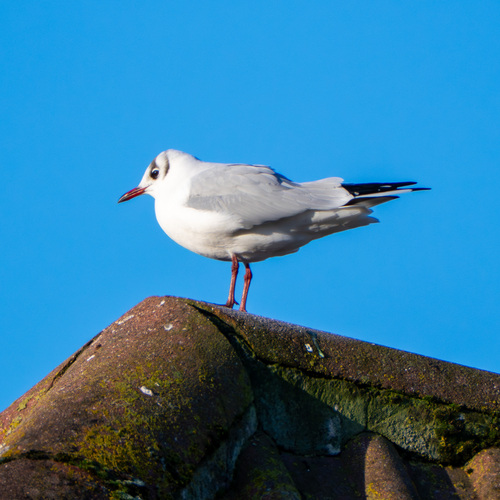
 How to recognize it
In breeding season, look for its dark chocolate-brown hood, red bill and legs, and white crescents around the eyes; in winter, the head is mostly white with a dark spot behind the eye. It is larger and has a red bill, unlike the smaller Bonaparte’s Gull with its black bill; the other similar species listed are mainly found in the Southern Hemisphere.
 When to see it
Black-headed Gull is seen most often in Jan, Feb, Mar, Apr, May, Jun, Jul, Aug, Sep, Oct, Nov, Dec. There are 7174998 public records of it worldwide.
 Questions
It’s seen most often in Jan, Feb, Mar, Apr, May, Jun, Jul, Aug, Sep, Oct, Nov, Dec.
In breeding season, look for its dark chocolate-brown hood, red bill and legs, and white crescents around the eyes; in winter, the head is mostly white with a dark spot behind the eye. It is larger and has a red bill, unlike the smaller Bonaparte’s Gull with its black bill; the other similar species listed are mainly found in the Southern Hemisphere.
It may peck or swoop if you approach its nest or try to handle it.















You may also like

Here to help while we’re tending the farm