

 Open in the Field Guide
We all need a Savior
“For all have sinned and fall short of the glory of God.”
Romans 3:23 (BSB)
None of us can earn our way to God by being good enough. We all need mercy.
 Field Guide · Reptiles and amphibians
Ambystoma laterale

Its skin can produce defensive secretions, so avoid putting it in your mouth and wash your hands after handling it.
The blue-spotted salamander is a small mole salamander found in the Great Lakes region and northeastern United States, as well as parts of Ontario and Quebec. It lives in moist woodlands and breeds in fish-free pools that often dry up seasonally; much of the year it stays underground.
 How to recognize it
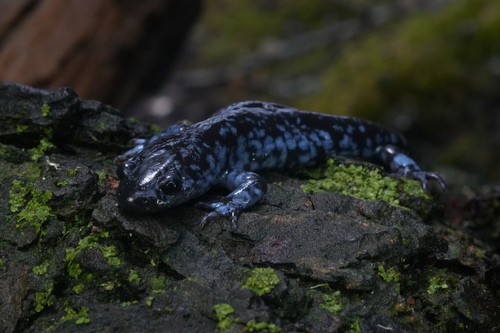
It has a slender, dark body with small blue or pale spots along its sides, legs, and tail. This helps distinguish it from the spotted salamander, which has larger yellow spots, and from the marbled and tiger salamanders, which have broader bands or blotches.
 When to see it
Blue-spotted Salamander is seen most often in Apr. There are 18738 public records of it worldwide.
 Questions
It’s seen most often in Apr.
It has a slender, dark body with small blue or pale spots along its sides, legs, and tail. This helps distinguish it from the spotted salamander, which has larger yellow spots, and from the marbled and tiger salamanders, which have broader bands or blotches.
Its skin can produce defensive secretions, so avoid putting it in your mouth and wash your hands after handling it.















You may also like

Here to help while we’re tending the farm