

 Open in the Field Guide
We all need a Savior
“For all have sinned and fall short of the glory of God.”
Romans 3:23 (BSB)
None of us can earn our way to God by being good enough. We all need mercy.
 Field Guide · Plants and flowers
Calla palustris

All parts are poisonous if eaten and can cause burning and irritation in the mouth and throat.
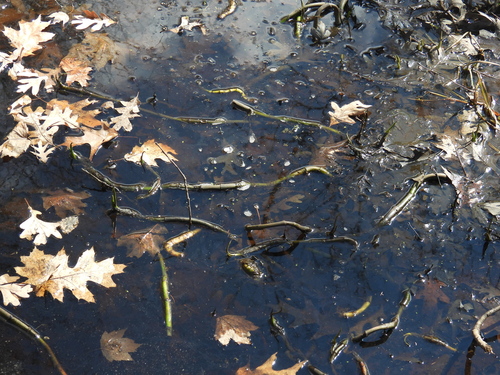
Bog arum is a perennial wetland plant native to cool regions of the Northern Hemisphere. It grows in bogs, marshes, and shallow water, often with its roots in mud.
 How to recognize it
It has glossy, heart-shaped leaves and a white, hoodlike spathe around a green flower spike. It is much smaller than the similar cultivated calla lily (often called Calla aethiopica), which has larger leaves and flowers.
 When to see it
Bog Arum is seen most often in Jun, Jul, Aug. There are 147590 public records of it worldwide.
 Questions
It’s seen most often in Jun, Jul, Aug.
It has glossy, heart-shaped leaves and a white, hoodlike spathe around a green flower spike. It is much smaller than the similar cultivated calla lily (often called Calla aethiopica), which has larger leaves and flowers.
All parts are poisonous if eaten and can cause burning and irritation in the mouth and throat.

You may also like

Here to help while we’re tending the farm