

 Open in the Field Guide
We all need a Savior
“For all have sinned and fall short of the glory of God.”
Romans 3:23 (BSB)
None of us can earn our way to God by being good enough. We all need mercy.
 Field Guide · Plants and flowers
Phoenix canariensis

Its stiff, sharp spines near the leaf bases can puncture skin, so avoid handling them.
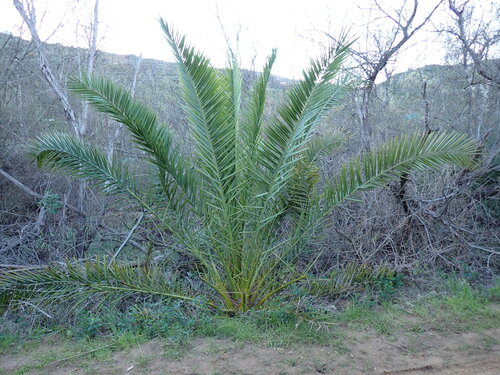
The Canary Island palm is a large, flowering palm native to the Canary Islands off the northwest coast of Africa. It also grows as an ornamental in warm parts of North America.
 How to recognize it
Look for a thick, solitary trunk topped by a dense crown of long, feather-shaped leaves; it is more robust and less likely to form clumps than Phoenix reclinata, though the other listed Phoenix palms can look similar.
 When to see it
Canary Island Palm is seen most often in Jan, Feb, Mar, Apr, May, Aug, Sep, Dec. There are 10150 public records of it worldwide.
 Questions
It’s seen most often in Jan, Feb, Mar, Apr, May, Aug, Sep, Dec.
Look for a thick, solitary trunk topped by a dense crown of long, feather-shaped leaves; it is more robust and less likely to form clumps than Phoenix reclinata, though the other listed Phoenix palms can look similar.
Its stiff, sharp spines near the leaf bases can puncture skin, so avoid handling them.

You may also like

Here to help while we’re tending the farm