

 Open in the Field Guide
We all need a Savior
“For all have sinned and fall short of the glory of God.”
Romans 3:23 (BSB)
None of us can earn our way to God by being good enough. We all need mercy.
 Field Guide · Plants and flowers
Ricinus communis

The seeds are highly poisonous if chewed or swallowed.
Castor oil plant is a large flowering shrub or small tree in the spurge family, originally native to tropical Africa. It is grown as an ornamental and for its seeds, and has become naturalized in warm regions around the world.
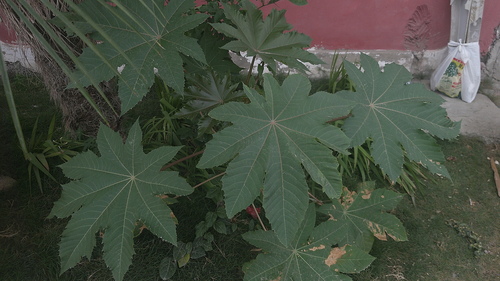
 How to recognize it
Recognize it by its large, star-shaped leaves with pointed lobes and its clusters of prickly seed capsules. Ricinus inermis and Ricinus mappa are generally treated as names for the same species, so they are not reliably distinguished from it.
 When to see it
Castor Oil Plant is seen most often in Apr, May, Sep, Oct. There are 105962 public records of it worldwide.
 Questions
It’s seen most often in Apr, May, Sep, Oct.
Recognize it by its large, star-shaped leaves with pointed lobes and its clusters of prickly seed capsules. Ricinus inermis and Ricinus mappa are generally treated as names for the same species, so they are not reliably distinguished from it.
The seeds are highly poisonous if chewed or swallowed.











You may also like

Here to help while we’re tending the farm