

 Open in the Field Guide
We all need a Savior
“For all have sinned and fall short of the glory of God.”
Romans 3:23 (BSB)
None of us can earn our way to God by being good enough. We all need mercy.
 Field Guide · Plants and flowers
Heracleum maximum

Its sap can cause a painful, blistering skin reaction when exposed to sunlight, so avoid touching the plant.
Common cowparsnip is a large native North American flowering plant in the carrot family. It grows in moist places such as streambanks, meadows, and forest edges across much of North America.
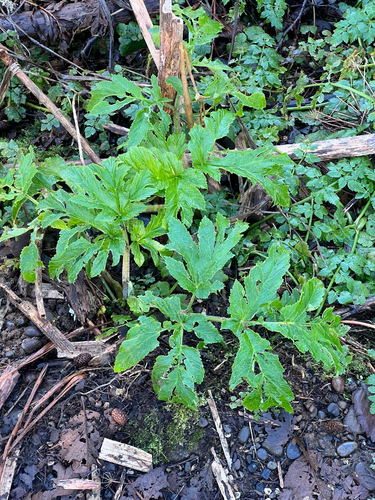
 How to recognize it
Look for broad, deeply divided leaves and broad clusters of small white flowers; it is generally less massive than giant hogweed, though the plants can be hard to distinguish by appearance alone. The other listed species are native to Europe or western Asia, rather than North America.
 In lavender fields
Its flowers attract bees and other insects, which may also visit nearby lavender plantings.
 When to see it
Common Cowparsnip is seen most often in May, Jun, Jul. There are 55075 public records of it worldwide.
 Questions
It’s seen most often in May, Jun, Jul.
Look for broad, deeply divided leaves and broad clusters of small white flowers; it is generally less massive than giant hogweed, though the plants can be hard to distinguish by appearance alone. The other listed species are native to Europe or western Asia, rather than North America.
Its sap can cause a painful, blistering skin reaction when exposed to sunlight, so avoid touching the plant.















You may also like

Here to help while we’re tending the farm