

 Open in the Field Guide
We all need a Savior
“For all have sinned and fall short of the glory of God.”
Romans 3:23 (BSB)
None of us can earn our way to God by being good enough. We all need mercy.
 Field Guide · Plants and flowers
Corylus avellana

Its nuts can trigger serious reactions in people with tree-nut allergies.
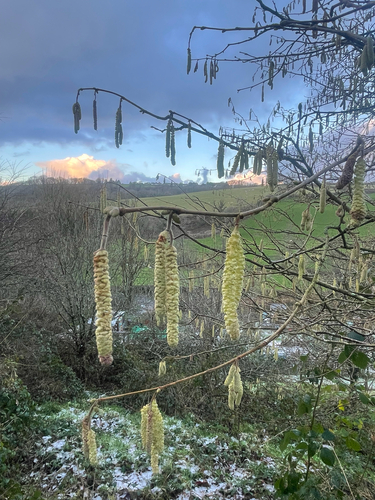
Common hazel is a deciduous shrub or small tree native to Europe and western Asia. It grows in woodland edges, hedgerows, and other mixed habitats, and produces edible nuts enclosed in leafy husks.
 How to recognize it
Look for broad, rounded leaves with heart-shaped bases and clusters of nuts in short leafy husks; beaked hazel has long, beak-like husks, while Turkish hazel grows into a much larger tree. It can resemble American and Asian hazels, so leaves and nuts may not be enough for a certain identification.
 When to see it
Common Hazel is seen most often in May, Jun, Jul, Aug, Sep. There are 1444342 public records of it worldwide.
 Questions
It’s seen most often in May, Jun, Jul, Aug, Sep.
Look for broad, rounded leaves with heart-shaped bases and clusters of nuts in short leafy husks; beaked hazel has long, beak-like husks, while Turkish hazel grows into a much larger tree. It can resemble American and Asian hazels, so leaves and nuts may not be enough for a certain identification.
Its nuts can trigger serious reactions in people with tree-nut allergies.















You may also like

Here to help while we’re tending the farm