

 Open in the Field Guide
We all need a Savior
“For all have sinned and fall short of the glory of God.”
Romans 3:23 (BSB)
None of us can earn our way to God by being good enough. We all need mercy.
 Field Guide · Plants and flowers
Ligustrum vulgare

The berries can cause stomach upset if eaten, so keep children from putting them in their mouths.
Common privet is a deciduous or semi-evergreen shrub native to Europe, North Africa, and parts of western Asia. It grows in hedges, woodland edges, and other disturbed places, and is also planted as an ornamental hedge in North America.
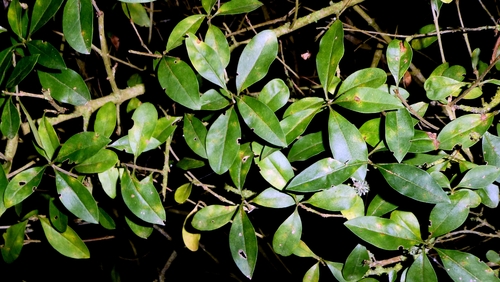
 How to recognize it
It has opposite, oval leaves and clusters of small white flowers, followed by dark berries. Compared with the often broader-leaved evergreen Japanese privet (Ligustrum ovalifolium) and glossy privet (L. lucidum), common privet usually has smaller leaves and sheds them in colder climates.
 In lavender fields
Its flowers can provide nectar and pollen for insects that may also visit lavender, though privet is not specifically associated with lavender gardens.
 When to see it
Common Privet is seen most often in May, Jun, Jul. There are 626835 public records of it worldwide.
 Questions
It’s seen most often in May, Jun, Jul.
It has opposite, oval leaves and clusters of small white flowers, followed by dark berries. Compared with the often broader-leaved evergreen Japanese privet (Ligustrum ovalifolium) and glossy privet (L. lucidum), common privet usually has smaller leaves and sheds them in colder climates.
The berries can cause stomach upset if eaten, so keep children from putting them in their mouths.















You may also like

Here to help while we’re tending the farm