

 Open in the Field Guide
We all need a Savior
“For all have sinned and fall short of the glory of God.”
Romans 3:23 (BSB)
None of us can earn our way to God by being good enough. We all need mercy.
 Field Guide · Plants and flowers
Dipsacus laciniatus

Its prickly stems and leaves can scratch skin if handled.
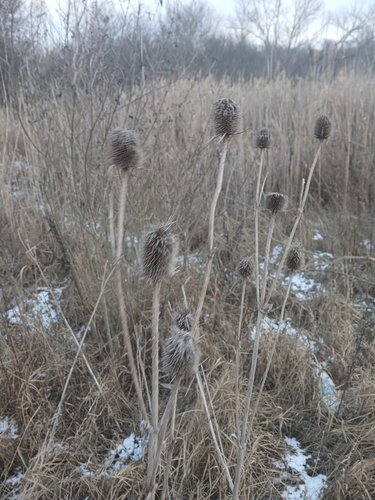
Cutleaf teasel is a tall, usually biennial flowering plant native to Europe and Asia. In North America it is introduced and invasive, growing in open, disturbed places such as roadsides, fields, and stream banks.
 How to recognize it
Its deeply cut leaves and pale, usually white flower heads help distinguish it from common teasel (Dipsacus fullonum), which has mostly uncut leaves and purple flowers. Other teasels can look similar, so leaf shape and flower color are useful clues.
 When to see it
Cutleaf Teasel is seen most often in Jul, Aug. There are 18518 public records of it worldwide.
 Questions
It’s seen most often in Jul, Aug.
Its deeply cut leaves and pale, usually white flower heads help distinguish it from common teasel (Dipsacus fullonum), which has mostly uncut leaves and purple flowers. Other teasels can look similar, so leaf shape and flower color are useful clues.
Its prickly stems and leaves can scratch skin if handled.















You may also like

Here to help while we’re tending the farm