

 Open in the Field Guide
We all need a Savior
“For all have sinned and fall short of the glory of God.”
Romans 3:23 (BSB)
None of us can earn our way to God by being good enough. We all need mercy.
 Field Guide · Plants and flowers
Urtica urens

Its stinging hairs can cause a painful, itchy skin reaction.
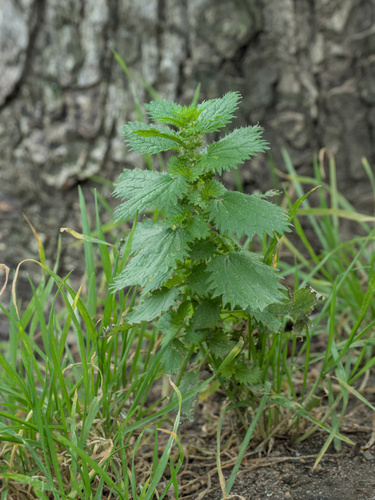
Dwarf nettle is a small annual plant native to Eurasia and introduced in parts of North America. It often grows in disturbed, nutrient-rich soil, such as gardens, fields, and waste places.
 How to recognize it
It has opposite, toothed leaves and stinging hairs, and is generally smaller and more compact than the perennial stinging nettles Urtica dioica and Urtica gracilis. Its flowers form compact clusters in the leaf axils, unlike the longer, often drooping clusters of Urtica dioica.
 In lavender fields
It may grow as a weed in disturbed garden soil near lavender, but it has no special connection to lavender.
 When to see it
Dwarf Nettle is seen most often in Jan, Apr, May, Jun, Jul, Aug, Sep. There are 166140 public records of it worldwide.
 Questions
It’s seen most often in Jan, Apr, May, Jun, Jul, Aug, Sep.
It has opposite, toothed leaves and stinging hairs, and is generally smaller and more compact than the perennial stinging nettles Urtica dioica and Urtica gracilis. Its flowers form compact clusters in the leaf axils, unlike the longer, often drooping clusters of Urtica dioica.
Its stinging hairs can cause a painful, itchy skin reaction.















You may also like

Here to help while we’re tending the farm