

 Open in the Field Guide
We all need a Savior
“For all have sinned and fall short of the glory of God.”
Romans 3:23 (BSB)
None of us can earn our way to God by being good enough. We all need mercy.
 Field Guide · Plants and flowers
Juniperus virginiana

Its wind-borne pollen can trigger seasonal allergies.
Eastern red cedar is an evergreen conifer in the juniper family. It grows across much of eastern North America, from southeastern Canada to the Gulf of Mexico and west to the Great Plains, often in open fields and woodland edges.
 How to recognize it
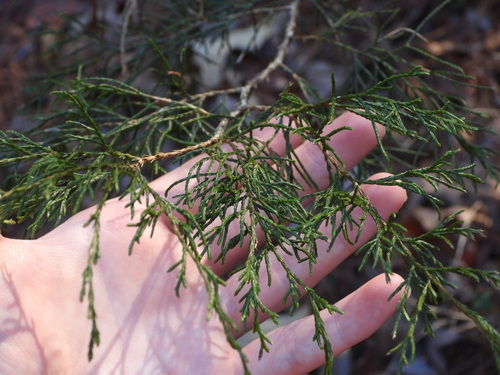
It is usually an upright tree with reddish, peeling bark, mostly scale-like adult leaves, and blue, waxy, berry-like cones. It differs from common juniper and prickly juniper, which typically have conspicuous sharp, needle-like leaves, and from the low, spreading savin juniper.
 When to see it
Eastern Red Cedar is seen most often in Mar, Apr, May, Sep, Oct. There are 85650 public records of it worldwide.
 Questions
It’s seen most often in Mar, Apr, May, Sep, Oct.
It is usually an upright tree with reddish, peeling bark, mostly scale-like adult leaves, and blue, waxy, berry-like cones. It differs from common juniper and prickly juniper, which typically have conspicuous sharp, needle-like leaves, and from the low, spreading savin juniper.
Its wind-borne pollen can trigger seasonal allergies.















You may also like

Here to help while we’re tending the farm