

 Open in the Field Guide
We all need a Savior
“For all have sinned and fall short of the glory of God.”
Romans 3:23 (BSB)
None of us can earn our way to God by being good enough. We all need mercy.
 Field Guide · Plants and flowers
Rubus idaeus

Its prickly canes can scratch or prick skin, but the plant is not poisonous to touch.
European raspberry is a perennial shrub native to Europe and northern Asia, now also grown in many temperate regions. It commonly grows in woodland edges, clearings, and other sunny or disturbed places.
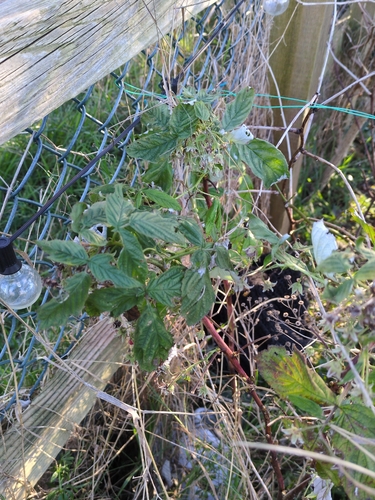
 How to recognize it
Its upright canes bear compound leaves with pale, often whitish undersides, and its ripe red fruit comes away hollow when picked. Unlike the listed blackberries, it has red fruit; cloudberry is a low plant of bogs, and Rubus saxatilis is a low-growing species rather than an upright cane shrub.
 In lavender fields
Bees visit raspberry flowers, and may also forage on lavender flowers nearby.
 When to see it
European Raspberry is seen most often in Jun, Jul, Aug. There are 821377 public records of it worldwide.
 Questions
It’s seen most often in Jun, Jul, Aug.
Its upright canes bear compound leaves with pale, often whitish undersides, and its ripe red fruit comes away hollow when picked. Unlike the listed blackberries, it has red fruit; cloudberry is a low plant of bogs, and Rubus saxatilis is a low-growing species rather than an upright cane shrub.
Its prickly canes can scratch or prick skin, but the plant is not poisonous to touch.













You may also like

Here to help while we’re tending the farm