

 Open in the Field Guide
We all need a Savior
“For all have sinned and fall short of the glory of God.”
Romans 3:23 (BSB)
None of us can earn our way to God by being good enough. We all need mercy.
 Field Guide · Plants and flowers
Populus alba

Its pollen may bother people with pollen allergies.
European white poplar is a deciduous tree native to parts of Africa, Europe, and Central Asia, and it has been introduced elsewhere. It often grows in moist places, including riverbanks, and tolerates hot summers and cold to mild winters.
 How to recognize it
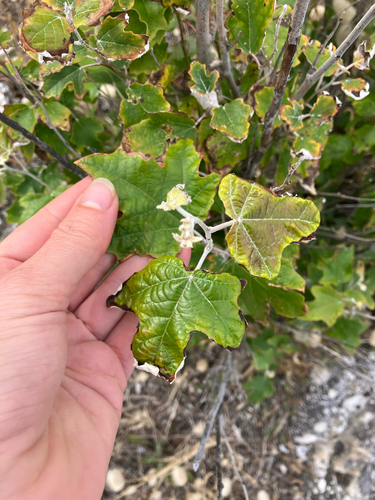
Its leaves have a dark green upper surface and a distinctive white, felt-like underside; some leaves are deeply lobed. This contrast helps distinguish it from the similar aspens and black poplar, whose leaves lack the same white underside.
 When to see it
European White Poplar is seen most often in May, Jun, Jul, Aug, Sep. There are 198474 public records of it worldwide.
 Questions
It’s seen most often in May, Jun, Jul, Aug, Sep.
Its leaves have a dark green upper surface and a distinctive white, felt-like underside; some leaves are deeply lobed. This contrast helps distinguish it from the similar aspens and black poplar, whose leaves lack the same white underside.
Its pollen may bother people with pollen allergies.





You may also like

Here to help while we’re tending the farm